Last Updated: November 15, 2026
Quick Summary
To detect slab leaks in older homes, turn off every fixture, note your water meter reading, wait 30 to 60 minutes, and read it again; if it moved, water is flowing somewhere. Then listen for hissing, feel for warm spots, and check for damp flooring, new cracks, and a musty odor.
- Older copper lines corrode from the inside out, and homes built before the 1980s may sit on original under-slab plumbing.
- Two or more symptoms together are a strong signal, since one symptom alone proves little.
- Skip the meter test while a sprinkler timer, pool fill, or water softener cycle could kick on and give a false reading.
- A running toilet, dripping outdoor spigot, or failed water heater can all move the meter, so rule those out first.
- If your meter test points to a leak, act the same day and ask for the leak location before any work starts.
Table of Contents
- Why Older Homes Are Prone to Slab Leaks
- Slab Leak Symptoms to Watch For in an Older Home
- How to Check for a Slab Leak: A Safe Homeowner Sequence
- Slab Leak Detection Tools: What Homeowners vs. Pros Use
- What to Do If You Suspect a Slab Leak
- When to Call a Professional Leak Detection Service
- Booking a Slab Leak Inspection with Hydroworks Plumbing
- Frequently Asked Questions
Why Older Homes Are Prone to Slab Leaks
A slab leak is a water leak in the pipes that run beneath your home’s concrete foundation. In older homes, those pipes have spent decades under constant pressure, and the materials used in past decades simply do not last forever. This guide from Hydroworks Plumbing walks you through how to detect slab leaks in older homes before the damage spreads.
Older copper lines corrode from the inside out. That corrosion weakens the pipe wall until a pinhole opens under pressure. Homes built before the 1980s may sit on original under-slab plumbing. Settled soil beneath a slab can shift and stress pipe joints.
A common mistake is assuming a small leak will stay small. Under a slab, water has nowhere to drain. It soaks into the soil and the concrete, and the damage grows quietly for weeks.
If your home is from that era, it is worth reading about whether whole house repiping is necessary for 1970s homes before you assume a repair is the only path.
Slab Leak Symptoms to Watch For in an Older Home
Slab leak symptoms rarely appear all at once. Most older homes show two or three small clues before anything dramatic happens. The trick is knowing which clues matter and which are just normal wear, and in an older home, the age of the plumbing changes both the order the clues show up and how they look.
Here is a quick checklist of physical symptoms to look for in an older home:
- A hissing or rushing sound when no water is running
- A warm or hot spot on the floor over a hot-water line
- Damp flooring, a wet spot, or standing water near a wall
- A musty odor that will not go away
- New cracks in floors or walls
- An unexplained jump in your water bill
- Water pressure that drops for no clear reason
One symptom alone proves little. Two or more together are a strong signal.
How Aging Plumbing Changes the Symptoms
Past repairs matter too. Ask for the plumbing history of the home before relying on a floor-only search.
Settled soil can shift under the slab and stress pipe joints, so leaks may appear at fittings rather than mid-run.
Sounds, Warm Spots, and Damp Floors
Listen for a hissing sound or a faint rushing water noise near the floor. A pressurized water leak under a slab often makes a steady sound, not a drip. A dripping sound can also point to a hot-water line leak.
Warm floors are another clue. A hot spot on a tile or concrete floor usually means a hot-water line is leaking beneath it. A cold-water line leak will not feel warm, so temperature alone will not rule it out.
Damp flooring, a wet spot, or standing water near an interior wall is a red flag. So is a musty odor, which often points to mold growth in the slab or carpet padding.
Water Bills, Cracks, and Musty Odors
An unexplained jump in your water bill is one of the most reliable early signs. Your water usage should stay steady from month to month. A sudden climb with no change in habits deserves a closer look.
Wall cracks and floor cracks can also point to a hidden leak. Water softens the soil under the slab, and the concrete shifts. Not every crack means a leak, but new cracks that keep growing do.
A musty odor that returns after cleaning usually means moisture is trapped somewhere.
How to Check for a Slab Leak: A Safe Homeowner Sequence
You can check for a slab leak yourself without opening a floor or touching a pipe. The sequence below is safe, repeatable, and uses only your water meter and your senses. Run it in order, and write down what you find.
For a fuller walkthrough, this guide on leak detection steps for slab and in-home leaks expands on the same sequence.
Step 1: Shut Off Fixtures and Read the Water Meter
This step tells you whether water is moving when nothing should be running.
- Turn off every plumbing fixture in the house: faucets, showers, the washer, the dishwasher, and the ice maker.
- Find your main shut-off valve and confirm it is fully open so water can still flow to the house.
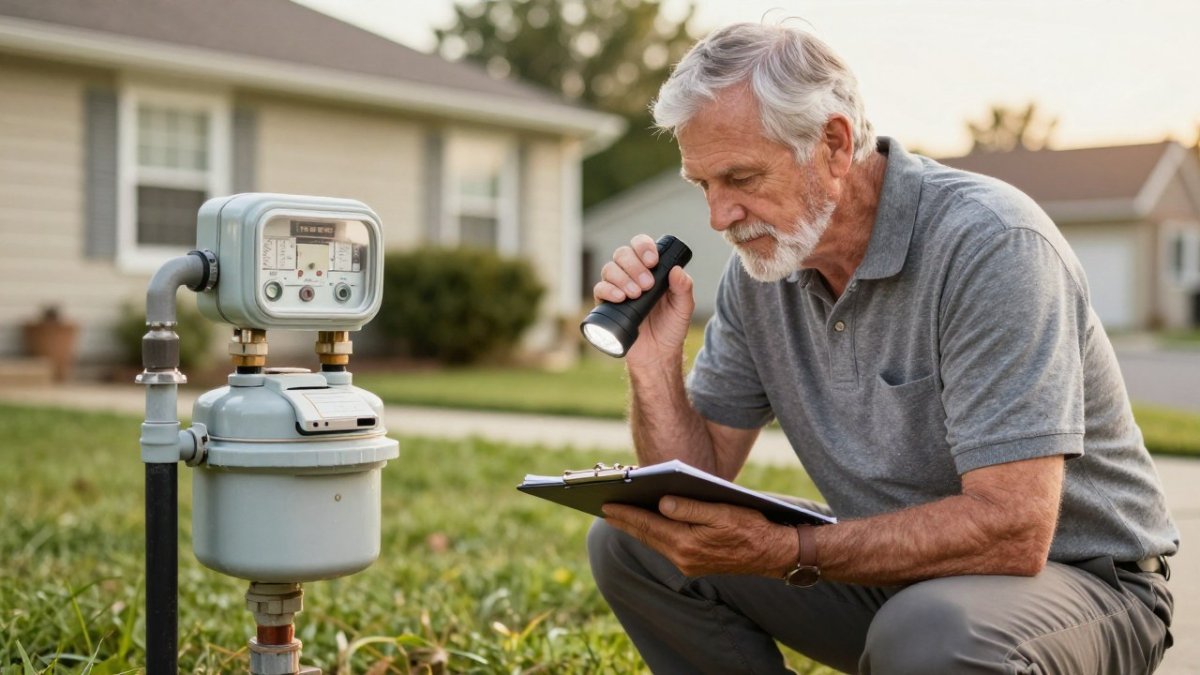
- Locate the water meter and wipe the dial or digital display clean.
- Write down the meter reading exactly.
- Wait 30 to 60 minutes with a stopwatch and no water use at all.
- Read the meter again.
If the reading moved, water is flowing somewhere. That points to a pressurized water leak, and a slab leak is a strong candidate. If it did not move, repeat the test once more to be sure.
Watch out: do not run this test while a sprinkler timer, pool fill, or water softener cycle could kick on. Those will give you a false reading and send you chasing a leak that is not there.
Step 2: Listen, Feel, and Rule Out Other Causes
Now use your senses, and rule out the easy explanations first.
- Press a glass against the floor and listen for hissing or rushing water.
- Walk the floor barefoot or with a hand to find a warm floor or hot spot.
- Check for damp flooring, wet spots, or standing water near walls and cabinets.
- Look for new floor cracks or wall cracks.
- Smell for a musty odor in closets and along baseboards.
Ruling out other causes matters. A running toilet, a dripping outdoor spigot, or a failed water heater can all move the meter. Check those first. If the meter still moves with everything off, the leak is likely under the slab.
Slab Leak Detection Tools: What Homeowners vs. Pros Use
Homeowners can check whether a leak is likely, while professionals can work to locate it.
| Method | Who Uses It | What It Finds | Best For | Limits |
|---|---|---|---|---|
| Water meter test | Homeowner | Whether water is moving | First check, free | Cannot locate the leak |
| Listening with a glass | Homeowner | Hissing or rushing sounds | Rough location | Fails on quiet or deep leaks |
| Thermal imaging camera | Pro | Warm spots from hot lines | Hot-water leaks | Misses cold-water leaks |
| Acoustic leak detection | Pro | Sound pinpointed to a spot | Precise leak location | Needs quiet and calibration |
| Pressure test | Pro | Whether a line holds pressure | Confirming a leak | Does not locate the spot |
| Infrared camera scan | Pro | Moisture patterns in slab | Hidden leaks | Reads surface temperature only |
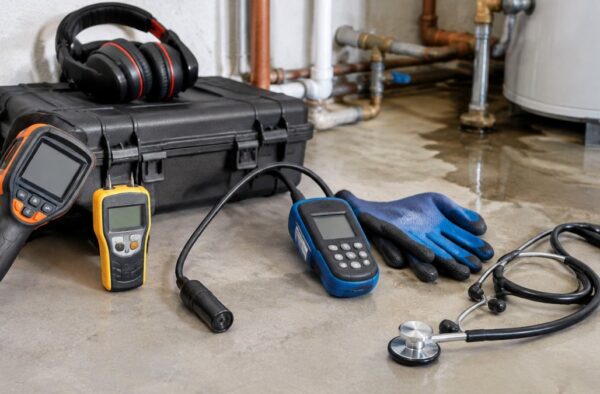
The water meter and a glass cost nothing. Thermal imaging, listening equipment, and a pressure test need trained hands and calibration. That is why professional inspection finds the leak location faster than guesswork.
How the Methods Differ
- Water meter test answers whether water is moving at all. It is the only step a homeowner needs to confirm a leak is likely, but it cannot tell you where.
- Acoustic listening answers where the sound is loudest. It works best on pressurized lines and in quiet conditions, and it struggles when the leak is deep, slow, or masked by traffic or appliances.
- Thermal imaging answers where the floor is warmer than it should be. It is fast and non-invasive, but it only sees hot-water leaks clearly; a cold-water leak may not show a temperature difference at all.
- Pressure testing answers whether a specific line holds pressure. It confirms a leak exists on that line, but it does not pinpoint the spot, it is usually paired with acoustic or thermal work.
- Tracer methods answer where a line actually runs. In older homes with reroutes and undocumented repairs, tracing the line first can keep a technician from drilling in the wrong place.
When Each Method Is Warranted
Start with the meter test if you suspect a leak. Consider a professional when the meter moves and you cannot explain why, or when a warm spot or damp patch keeps returning. Ask any technician which methods they plan to use and why.
What to Do If You Suspect a Slab Leak
If your meter test points to a leak, act the same day. A slab leak under a concrete slab can water damage flooring, drywall, and cabinets fast. Early detection keeps a small repair from becoming a large one.
Here is what to do if you suspect a leak:
- Stop using water heavily until the leak is confirmed.
- Note the leak size from your meter test so you can share it.
- Shut off the shut-off valve if water is actively pooling.
- Call a leak specialist for a professional inspection.
- Ask for the leak location and a clear explanation before any work starts.
If a leak is confirmed, you can review slab leak repair to see the next steps. Readers weighing the decision can check the average cost of residential slab leak repair to plan before committing.
When to Call a Professional Leak Detection Service
Call a professional when the meter test moves and you cannot explain why. That single result is the clearest sign a hidden leak is present. A leak specialist can help locate the exact spot.
Also call if you see any of these:
- Standing water or damp flooring that keeps returning
- A warm floor or hot spot that stays warm
- Mold growth or a musty odor that will not clear
- New wall cracks or floor cracks that keep growing
- A water bill that stays high after the meter test
Do not wait on foundation damage. Water under a slab can weaken the soil, and small problems can become expensive. Our water leak detection service is available to help you.
Booking a Slab Leak Inspection with Hydroworks Plumbing
The hardest part of how to detect slab leaks in older homes is knowing when your own checks are enough. Our licensed and insured team uses modern equipment and proven methods to provide accurate problem diagnosis.
We provide upfront cost information before work begins, and we offer clear recommendations and practical solutions. We also offer 24/7 emergency service. If you have run the meter test and something still feels off, that is the moment to call.
Get started with Hydroworks Plumbing and get a clear answer on whether your older home has a slab leak.
A slow leak under an older slab will not fix itself, and the damage only grows with time. If your meter test moved and you cannot find the cause, let a licensed team confirm it. Hydroworks Plumbing offers accurate problem diagnosis, upfront cost information, and 24/7 emergency service. Get started with Hydroworks Plumbing and protect your foundation before a small leak becomes a major repair.
Frequently Asked Questions
Can you have a slab leak and not know it?
Yes. Many slab leaks start as slow pressurized water leaks under the concrete slab and go unnoticed for weeks. The first clues are often a higher water bill, a faint hissing sound when the house is quiet, or a warm spot on the floor. In older homes with copper under-slab plumbing, a pinhole leak can seep for a long time before visible damage appears, which is why periodic meter checks matter.
Can a water meter help identify a slab leak?
A water meter is one of the simplest slab leak detection tools a homeowner has. Shut off every fixture, appliance, and outdoor spigot, then watch the meter’s leak indicator or low-flow dial. If it moves with nothing running, water is escaping somewhere in the system. That confirms a leak but not its location, so a plumber still needs acoustic listening or thermal imaging to pinpoint it under the slab.
How do plumbers locate a leak beneath a slab?
Plumbers use acoustic leak detection to listen for the sound of pressurized water escaping, infrared cameras to spot temperature differences from hot-water lines, and pressure tests to isolate the hot and cold lines. In older homes, they may also isolate sections of under-slab plumbing to narrow the leak location before opening the concrete, which limits how much floor has to be removed.
What should you do first if you suspect a slab leak?
Shut off the main water valve to stop the flow, note any warm spots, damp flooring, or hissing sounds, and avoid walking on buckled flooring. Call a licensed leak detection service rather than breaking into the slab yourself. Early detection limits water damage and foundation damage, and a professional can confirm the leak size and location before any repair work begins.