Last Updated: November 21, 2026
Quick Summary
Emergency burst pipe repair cost depends on labor, materials, and after-hours fees rather than a single flat rate. Most straightforward burst pipe repair takes one to three hours once the plumber arrives, though access work behind walls or slabs adds time.
- Labor is usually the largest line on the bill, with nights, weekends, and holidays billed higher.
- Ask whether the diagnostic fee is credited toward the repair or charged separately.
- Compare quotes line by line, checking if access work and cleanup are included.
- Shut off the main water valve first to stop the flow and limit damage.
- Most homeowners policies cover sudden water damage but typically not the pipe repair itself.
Table of Contents
- What Drives Emergency Burst Pipe Repair Cost
- Emergency Plumbing Repair Cost: What to Expect on the Bill
- How Long Does It Take to Fix a Burst Pipe?
- How Much to Fix a Broken Pipe in a Wall
- Does Insurance Cover Burst Pipes?
- Water Damage Mitigation and Restoration Costs
- Repair or Replace: Making the Call on Old Pipes
- What to Do Before the Plumber Arrives
- Schedule Your Emergency Plumbing Assessment
- Frequently Asked Questions
What Drives Emergency Burst Pipe Repair Cost
A burst pipe is one of the few home emergencies that gets more expensive every minute you wait. The honest answer is that emergency burst pipe repair cost depends on a handful of concrete variables, not a single flat rate.
The U.S. Environmental Protection Agency’s WaterSense program notes that the average household loses a meaningful volume of water to undetected leaks each year, which is why speed matters more than almost any other factor.
Labor, Materials, and Emergency Fees
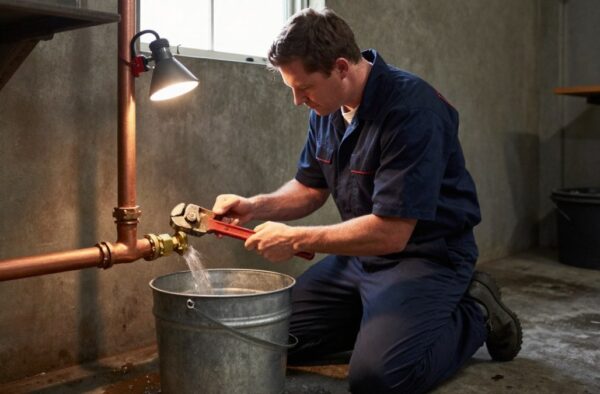
Labor is usually the largest line on the bill. Standard-hour work bills lower than nights, weekends, and holidays, when overtime and weekend surcharges apply. Materials stay relatively stable: a short section of copper costs more than the equivalent length of PEX, while PVC sits at the low end for drain-side work. The emergency fee itself is the variable homeowners underestimate most. It is not a penalty; it reflects the cost of keeping licensed crews on call around the clock.
Emergency Plumbing Repair Cost: What to Expect on the Bill
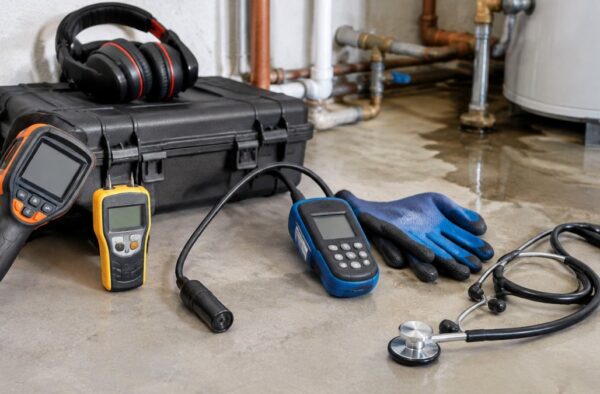
Emergency plumbing repair cost is best understood as an itemized estimate, not a single number. A reputable plumber breaks the bill into diagnostic time, labor hours, materials, and any after-hours charge, so you can see exactly what you’re paying for. The section below shows how each line is built and how to read two quotes side by side.
Expect the estimate to include:
- Diagnostic fee – the charge to locate and assess the failure
- Labor hours – billed at standard or after-hours rates
- Materials – pipe, fittings, solder, or couplings
- Access and repair work – cutting into a wall, ceiling, or floor if needed
- Cleanup and water removal – often a separate line
- Permit or inspection fees – where local code requires them for the repair
How the Emergency Premium Is Calculated
Ask which after-hours billing model applies before you book, and confirm the rate in writing.
Reading Two Quotes Side by Side
When you have more than one estimate, compare like with like:
- Is the diagnostic fee credited toward the repair if you proceed, or charged separately?
- Is the after-hours rate a multiplier or a flat fee, and does the minimum call-out window apply?
- Are materials itemized by type and length, or bundled into a single line?
- Is access work (cutting and patching drywall) included, or billed as a separate trade?
- Is cleanup and water extraction included, or subcontracted?
Compare quotes line by line, since the headline number alone does not show what each one includes.
We provide upfront cost information before work begins, so there are no surprises when the invoice arrives. You can read more about plumbing diagnostic fee transparency to understand exactly how that first charge works.
Diagnostic and After-Hours Charges
Ask upfront whether any diagnostic fee is credited to the final bill, and confirm the after-hours terms before any work begins.
How Long Does It Take to Fix a Burst Pipe?
Most straightforward burst pipe repairs take one to three hours once the plumber arrives. How long does it take to fix a burst pipe in a wall or under a slab? That’s where timelines stretch, because access work adds time before the actual repair begins.
A few things move the clock:
- Accessibility – an exposed pipe in a basement is fast; one behind finished drywall is not
- Pipe location – slab and ceiling runs require opening the structure
- Repair severity – a pinhole leak differs from a fully ruptured line
- Water damage – standing water and soaked materials add cleanup time
Knowing what to expect during emergency plumbing service helps you plan the disruption. Expect the visit to run longer than a scheduled repair, and expect the plumber to shut off water and isolate the line before any cutting starts.
Here is what moves the clock on a typical burst pipe repair.
| Factor | Effect on timeline |
|---|---|
| Accessibility | Exposed basement pipe is fast; finished drywall is not |
| Pipe location | Slab and ceiling runs require opening the structure |
| Repair severity | Pinhole leak differs from a fully ruptured line |
| Water damage | Standing water and soaked materials add cleanup time |
| Typical repair | One to three hours once the plumber arrives |
How Much to Fix a Broken Pipe in a Wall
How much to fix a broken pipe in a wall is one of the most common questions we hear, and the answer hinges on access. Cutting into drywall, locating the failure, and patching afterward all add labor and materials to the job.
Does Insurance Cover Burst Pipes?
Does insurance cover burst pipes? Often, yes, but with important limits. Most homeowners policies cover sudden, accidental water damage from a burst pipe, including the cost of drying out and repairing the home (Water Damage: Whats Covered; Whats Not). What they typically do not cover is the pipe repair itself, which is treated as maintenance.
The distinction matters:
- Covered: water damage to walls, floors, ceilings, and belongings from a sudden burst
- Usually not covered: the failed pipe and the labor to fix it
- Depends on cause: damage from neglect or a known slow leak may be excluded
Document everything before cleanup: photos, video, and receipts. Contact your insurer early, and keep the failed pipe section if possible. Policies vary widely, so read your deductible and exclusions before assuming coverage.
Water Damage Mitigation and Restoration Costs
Water damage mitigation and restoration often costs more than the plumbing repair itself. Mitigation is the urgent work: extracting standing water, drying structural materials, and preventing mold. Restoration is putting the home back together, from drywall to flooring to paint.
The Federal Emergency Management Agency’s flood damage guidance stresses acting quickly on water intrusion to limit structural and mold damage, which is exactly why the repair and the cleanup should be coordinated, not handled weeks apart.
Repair or Replace: Making the Call on Old Pipes
If your home has pre-1980 plumbing, a single burst is often a warning, not an isolated event. Repeated failures, corroded copper, or brittle galvanized lines usually point toward replacement rather than another spot fix. A clear repiping versus spot repair comparison helps you weigh the two paths honestly.
Criteria That Point Toward Replacement
Use these signals as a checklist rather than a single trigger:
- Repeat failures – two or more bursts or major leaks on the same material within a few years
- Material and age – galvanized steel near or past its expected service life, or copper with visible pitting and pinhole leaks
- Water quality symptoms – discolored water, low pressure at multiple fixtures, or recurring sediment
- Access cost stacking – each spot repair requires opening finished walls or slab, so the access cost repeats every time
- Insurance signals – an insurer that has flagged repeated water-damage claims
Criteria That Point Toward Spot Repair
- Localized failure on an otherwise sound material, such as a single joint or a freeze split on one run
- Accessible location where the repair does not require opening finished surfaces
- Recent repipe on the affected run, where the failure is a fitting rather than the pipe itself
- Budget constraint where a full repipe is not feasible this year and the spot repair restores safe service
The Trade-Off in Plain Terms
A spot repair is a smaller upfront outlay and restores water quickly. A whole-house repipe is a larger upfront investment, but it ends the cycle of emergency calls and repeated access work. The honest comparison weighs the cost of one repair plus the likely future emergency calls, access work, and water-damage claims against the cost of a repipe.
What to Do Before the Plumber Arrives
Shut off the main water valve first. That single step stops the flow and limits damage while you wait. Then open a low faucet to drain remaining pressure from the lines.
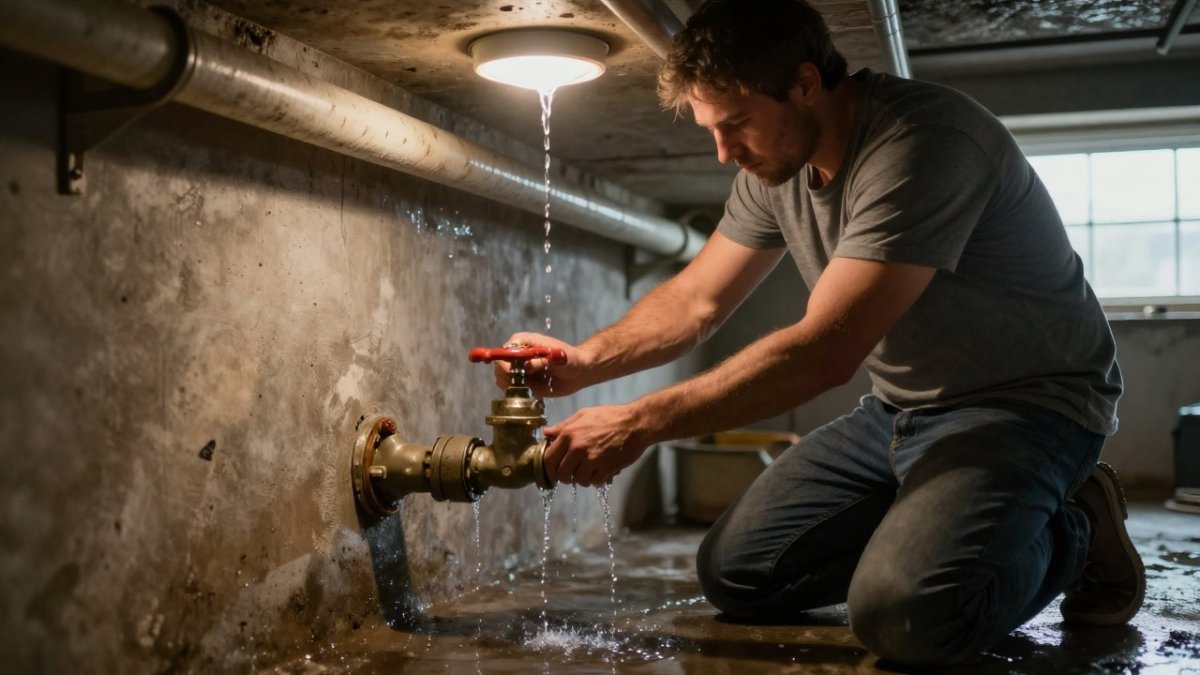
Work through this sequence:
- Shut off the main valve and, if the burst is on a fixture line, close the local shut-off
- Cut power to any area where water is near outlets or fixtures
- Move furniture, rugs, and valuables away from the water
- Place buckets and towels to catch drips and contain spread
- Photograph the damage for your insurer before cleanup
- Call for emergency service and confirm the after-hours rate
Never pour anything down a drain to “test” the line, and avoid patching a pressurized pipe yourself.
Schedule Your Emergency Plumbing Assessment
A burst pipe rewards fast action, and the difference between a contained repair and a flooded home often comes down to who you call and how quickly they arrive. Hydroworks Plumbing offers 24/7 emergency service with a licensed and insured team, accurate problem diagnosis, and clear upfront cost information before any work starts. If you’re weighing whether to wait or call now, our guide on the difference between an emergency and scheduled plumber explains why urgent failures cost less to fix early.
We use modern equipment and proven methods.
When water is spreading and the clock is running, you need a crew that actually answers at 2 a.m. and tells you the cost before touching a pipe. Hydroworks Plumbing provides 24/7 emergency response, upfront pricing, and accurate diagnosis across Hayward and the East Bay. Get started with Hydroworks Plumbing and schedule your emergency plumbing assessment today.
Frequently Asked Questions
How much should it cost to fix a burst pipe?
The final burst pipe repair cost depends on pipe material, location, and how quickly the leak is stopped. A standard repair on an accessible copper or PEX line typically costs less than cutting into a wall or ceiling. Emergency calls add after-hours fees.
How much does emergency plumbing repair cost?
Emergency plumbing repair cost depends on the work involved and when the call is made. The total depends on repair severity and accessibility. Ask for an itemized estimate covering labor, materials, and any call-out fee before approving work.
Does homeowners insurance cover burst pipes?
Most homeowners policies cover sudden water damage from a burst pipe, but not the pipe repair itself. Review your deductible and document the damage with photos before cleanup. Keep receipts for mitigation and restoration.
How long does it take to fix a burst pipe?
A simple accessible repair can take one to three hours. Pipes behind a wall or under a slab may take longer because of cutting and patching. Water damage mitigation adds time. Ask your plumber for a repair time estimate after diagnosis so you can plan around the work.
Can a burst pipe be repaired without replacing the entire pipe?
Yes. Many bursts are repaired with a section replacement, coupling, or patch. Full pipe replacement makes sense when the pipe is corroded or near the end of its life. A licensed plumber should explain repair complexity and whether replacement is the more durable choice.
What factors affect the cost of repairing a burst pipe?
Pipe material, location, accessibility, damage extent, and time of call all affect the price. Copper and PEX cost differently, and pipes behind a wall require cutting and patching. Emergency and weekend rates raise the total.