Quick Summary
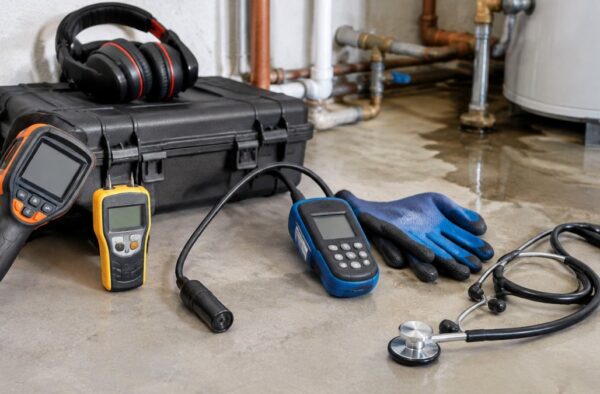
Residential water leak detection usually starts with a meter and fixture isolation test to confirm a leak exists, then moves to acoustic listening, thermal imaging and pressure testing to narrow it down. Professionals often combine two or three methods so the leak is found before any wall or floor is opened.
- A water meter that keeps moving with every fixture off is one of the clearest signs of a hidden leak.
- Acoustic listening is a fast, non-invasive first step on pressurized supply lines.
- Thermal imaging is often paired with acoustic methods to spot slab leaks without cutting concrete.
- Pressure testing confirms a leak before any surface is opened.
- Ask for a diagnosis before approving any repair, and get the estimate in writing.
Table of Contents
- How We Selected These Residential Water Leak Detection Services
- Hidden Water Leak Signs Homeowners Should Not Ignore
- Professional Water Leak Detection Methods Compared
- The Water Leak Detection Process From Call to Repair Estimate
- Questions to Ask a Leak Detection Contractor Before You Book
- Booking Your Residential Leak Inspection With Hydroworks Plumbing
- Frequently Asked Questions
Last Updated: November 22, 2026
Finding a hidden water leak in a house is rarely simple, and the wrong first move can cost a homeowner thousands in unnecessary repairs. Hydroworks Plumbing has put together this comparison of residential water leak detection approaches so homeowners can understand what each method does and when to call a professional. A leak that goes unfound for weeks can rot framing, warp flooring and raise the water bill long before anything shows on the surface, so knowing the options early matters.
How We Selected These Residential Water Leak Detection Services
We reviewed the publicly available service pages and listings for several regional leak detection providers, along with Hydroworks Plumbing’s own service information. We looked for providers that clearly describe their detection work, serve residential customers, and state their licensing or service scope. Where a provider did not publish specific methods or prices, we say so rather than fill the gap with guesses.
Hidden Water Leak Signs Homeowners Should Not Ignore
Most hidden leaks announce themselves quietly. A water meter that keeps moving when every fixture is off is one of the clearest signals, and it is worth checking before anyone else is involved. For a deeper guide on spotting hidden leaks like this, see how to detect slab leaks in older homes. Other common warning signs include:
- Unexplained increases on the monthly water bill
- Damp spots, soft flooring or warped baseboards with no obvious source
- A musty smell or mildew in a closet, cabinet or under a sink
A single sign is not proof of a leak, but two or more together justify a professional look. For a slab leak, which sits under the concrete foundation, warm spots on the floor or a sudden drop in water pressure are often the first hints.
Professional Water Leak Detection Methods Compared
Professionals generally do not rely on a single tool.
| Method | What It Does | Best For | Limitations and Access Needs |
|---|---|---|---|
| Meter and fixture isolation test | Compares meter movement with every fixture closed, then isolates sections | Confirming a leak exists before paying for detection | Cannot locate the leak; requires access to the main shutoff and meter |
| Acoustic listening | Amplifies the sound of escaping water through pipe walls and slabs | Pressurized supply lines and slab leaks | Background noise, pipe material and depth can mask the sound; no demolition needed |
| Thermal imaging | Reads temperature differences that suggest moisture or hot water | Slab leaks, wall moisture, hot water lines | Works best with a temperature differential; may miss slow cold-water leaks; no demolition needed |
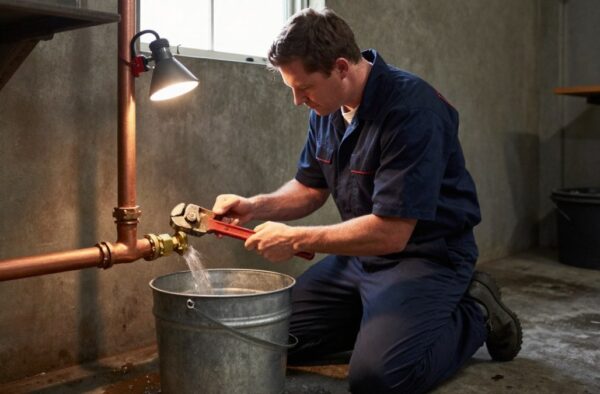
| Pressure testing | Isolates a section and measures whether it holds pressure | Confirming a leak and ruling out fixtures or appliances | Requires shutting off and draining sections; may need access panels |
| Electronic tracing and line location | Follows the pipe path or a signal to mark the exact spot | Pinpointing before excavation or cutting | Needs a clean access point; accuracy depends on the technician’s equipment and experience |
| Moisture mapping | Measures moisture content across a surface to outline the affected area | Mapping the spread of a confirmed leak | Shows moisture, not the source; surfaces may need to be exposed |
Acoustic listening is generally a fast non-invasive first step on pressurized lines.
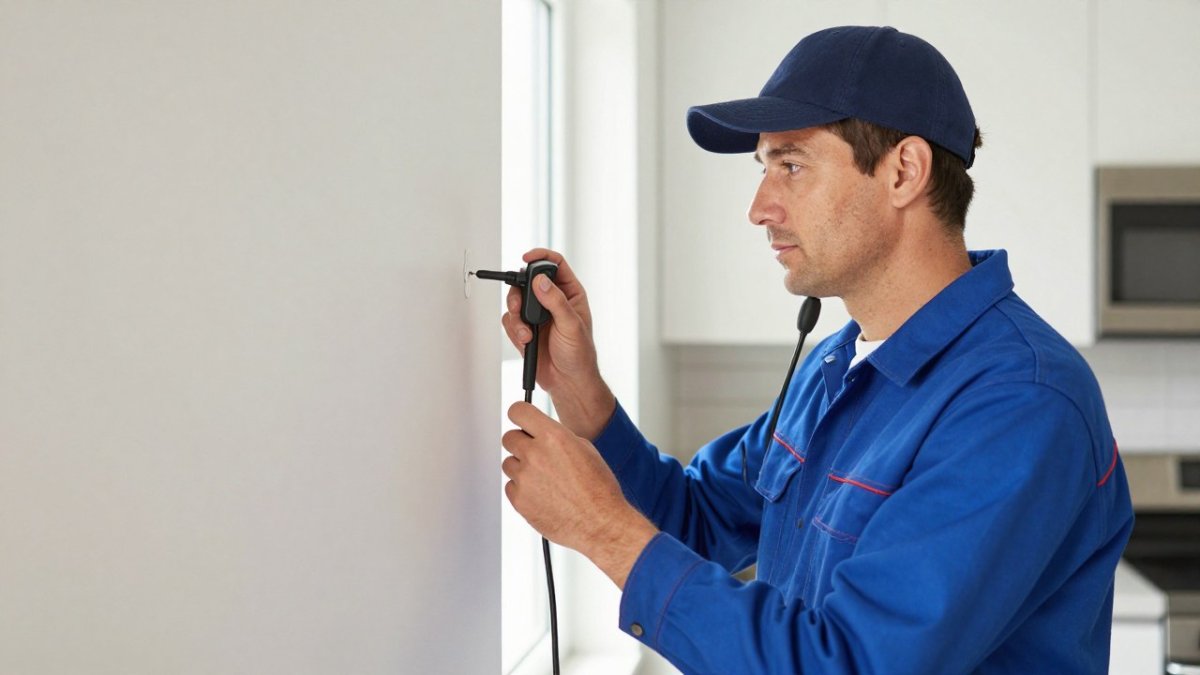
A common pattern is that the method mix changes with the symptom.
The trade-off with professional detection is cost and scheduling. You can review how the company explains its diagnostic fees before booking.
Pros and cons of professional detection versus DIY checks
- Pros: Specialized equipment finds leaks that a homeowner cannot hear or see, and a documented diagnosis helps with repair decisions and insurance paperwork.
Some homeowners can do a basic meter test themselves. This is free and worth doing first, but it cannot locate the leak.
The Water Leak Detection Process From Call to Repair Estimate
A typical leak investigation follows a clear sequence. First, the homeowner describes the symptoms and any changes on the water bill. Next, the leak is confirmed, commonly with pressure testing or a meter check.
Watch out: homeowners sometimes approve a repair before the leak is confirmed, which can mean opening walls or floors that did not need opening. Ask for the diagnosis first.
Questions to Ask a Leak Detection Contractor Before You Book
A short phone call before booking tells a homeowner most of what they need to know. The questions below are the ones that separate a diagnostic-first contractor from one that opens walls first and asks questions later.
- Is the company licensed and insured for plumbing work in our area? Ask for the license number and the name it is issued under, then confirm it with the state or local licensing authority. Ask for a certificate of insurance showing general liability coverage, and confirm the policy is current.
- What detection methods will you use, and why? A good answer ties the method to the symptom you described. If the contractor names one tool before hearing the symptoms, the diagnosis is likely to be a guess.
- Is there a diagnostic fee, and is it applied to the repair cost? Ask whether the fee covers the inspection only or includes the written findings, and whether it is credited if you approve the repair. Get the answer in writing before the visit.
- Will you provide written findings before any repair begins? The report should state what was tested, what was found, where the leak is, and what repair is recommended. Ask whether photos or thermal images are included.
- Will you give a written estimate before any repair begins, and will you get my authorization before starting? No work should begin without your approval of the scope and price.
- Do you offer emergency service if the leak turns out to be active? Ask about after-hours availability and any difference in rates.
- What warranty covers the detection work and the repair? Ask how long the warranty runs and what it covers.
A neutral checklist helps compare providers side by side:
- License number verified with the state or local authority
- Certificate of insurance on file
- Detection equipment listed and matched to the symptom
Clear answers on these points tell a homeowner a good deal about how a contractor operates. Vague replies are a reason to keep looking.
Booking Your Residential Leak Inspection With Hydroworks Plumbing
Hydroworks Plumbing delivers residential and commercial plumbing services throughout Hayward and the East Bay, with a licensed and insured team and 24/7 emergency service. The company’s focus is accurate diagnosis, practical repair recommendations and upfront cost information, so homeowners know what to expect before work starts. If you are seeing any of the warning signs above, schedule a residential leak inspection and the team will walk you through the diagnosis. For a leak that may sit under the foundation, you can also review slab leak repair options and how the leak detection process works before you book.
Water leaks are easier to solve when they are found early and diagnosed correctly. Hydroworks Plumbing can help you confirm what is happening in your home and recommend the right next step, with clear pricing before any work begins. Get a quote from Hydroworks Plumbing to start your inspection.
Frequently Asked Questions
How much does residential leak detection cost?
Pricing depends on the property, the access required, and the detection method used, so there is no single standard figure to quote here. Hydroworks Plumbing does not publish fixed leak detection prices in this article. The most reliable way to get a number is to ask for an upfront quote before any work begins, and to confirm whether a diagnostic visit is credited toward the repair if you proceed. Compare written estimates that list the scope of work, the equipment used, and what is included in the service call.
How can I tell if my home has a hidden water leak?
Watch for signs such as a water meter that keeps moving when no fixtures are running, unexplained increases in your water bill, damp or discolored drywall, soft flooring, musty odors, and the sound of running water inside walls when the house is quiet. Checking your meter before and after a two-hour period with no water use is a simple first test. If you notice these signs, schedule a professional inspection rather than waiting, since hidden leaks can cause structural and moisture damage over time.
Does a leak detection service also repair the leak?
It depends on the provider and the job. Some companies only locate the leak and hand you a report, while others, including plumbing firms that handle both detection and repair, can fix the problem during the same visit once you approve the estimate. Ask before booking whether the visit covers only diagnosis or includes repair, and whether a repair estimate will be provided in writing before any work starts. Visit the Hydroworks Plumbing website for current service details.
What should I do before a technician arrives?
Shut off the main water valve if you suspect an active leak, note where you have seen damp spots or heard water, and clear access to the area the technician needs to reach, such as a crawl space, water heater, or under-sink cabinet. Write down the signs you noticed and when they started, and have your water bill ready. This information helps the technician narrow the search and can shorten the visit.