Last Updated: November 6, 2026
Quick Summary
Leak detection starts inside the home with warning signs such as a water meter that moves with every fixture off, an unexplained rise in your monthly bill, warm or damp floor patches, or a musty smell. Shut off all water sources, record the meter, and listen near the water heater, walls, and slab for hissing or running water.
- Check whether the water meter keeps moving with all taps and appliances off.
- Record the meter reading, then check it again after an hour.
- Listen near the water heater, walls, and slab for hissing or running water.
- Compare your water bill with past months to spot unusual trends.
- Older galvanized or cast iron lines often fail in several places at once.
Table of Contents
- Leak Detection Signs Inside Your Home
- Finding a Water Leak Inside Walls and Slabs
- Next Steps: Confirming a Leak and Planning Repiping
- Frequently Asked Questions
Leak Detection Signs Inside Your Home
Hidden leaks often show up before you see any water. Watch for a water meter that keeps moving when no fixture is running, a sudden jump in your water bill, damp or warm spots on floors, soft flooring, or a musty smell.
- Meter moves with all taps and appliances off
- Unexplained rise in your monthly water bill
- Warm or damp patches on the floor
- Mold, mildew, or peeling paint on walls
Finding a Water Leak Inside Walls and Slabs
Start by shutting off every water source, then check the meter. Work through these steps:
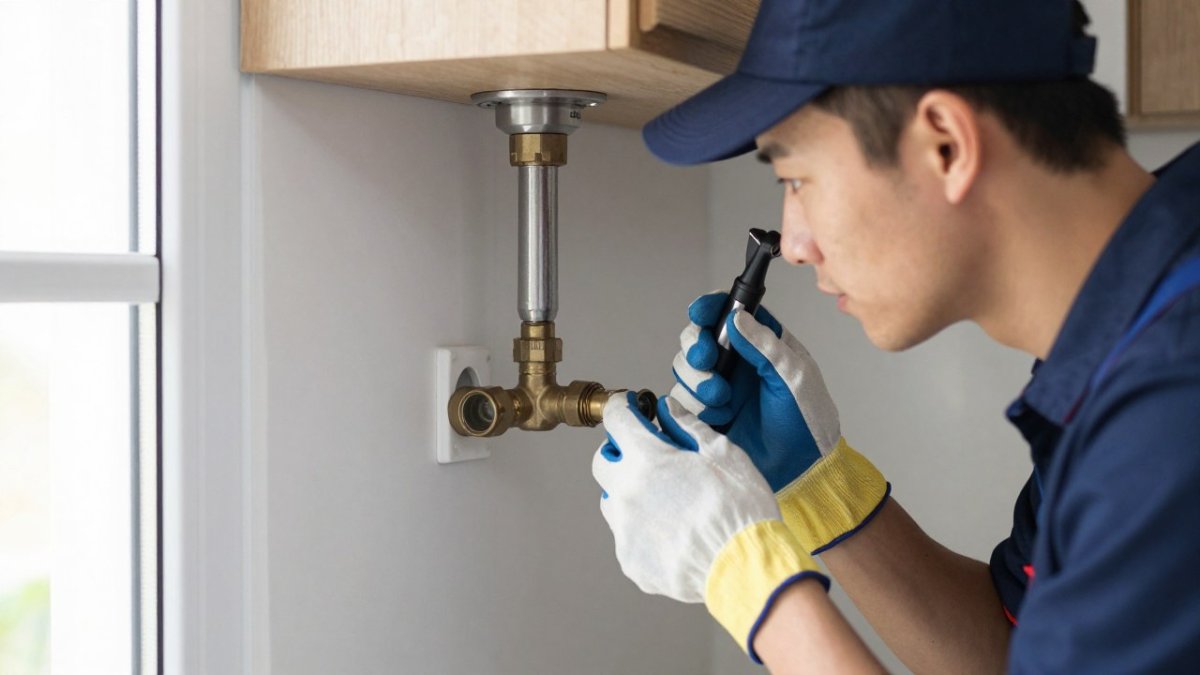
- Turn off all faucets and appliances.
- Record the meter reading and check it again after an hour.
- Listen near the water heater, walls, and slab for hissing or running water.
- Compare your bill to past months to spot trends.
A professional leak detection service can help pinpoint the source of a leak. Explore our water leak detection service if you need a precise location. If the leak sits under a concrete slab, our slab leak repair in Hayward team can handle it.
The steps below summarise how to check for a leak inside walls and slabs.
| Step | What to do | Time or frequency |
|---|---|---|
| 1 | Turn off all faucets and appliances | Before starting |
| 2 | Record the meter reading | Check again after an hour |
| 3 | Listen near the water heater, walls and slab | During the check |
| 4 | Compare your bill to past months | Look for trends over months |
Next Steps: Confirming a Leak and Planning Repiping
Once you confirm a leak, act quickly to limit damage. Older galvanized or cast iron lines often fail in several places at once. If leaks keep returning, the whole system may need replacing. Hydroworks Plumbing offers whole house repiping in Hayward for homes with aging plumbing. Compare the cost of whole house repiping before deciding, or review repiping versus spot repair to choose the right fix.
Frequently Asked Questions
What are the signs of a slab leak?
Common signs include a warm spot on the floor, a sudden rise in your water bill, the sound of running water when all fixtures are off, cracks in flooring or walls, and dampness or mold near the foundation. Any of these patterns is a reason to call a licensed plumber for a diagnostic visit rather than digging into the slab yourself. Your water meter is a useful check: note the reading, keep all water off for about two hours, and read it again.
Can a water leak inside a wall be detected without opening it?
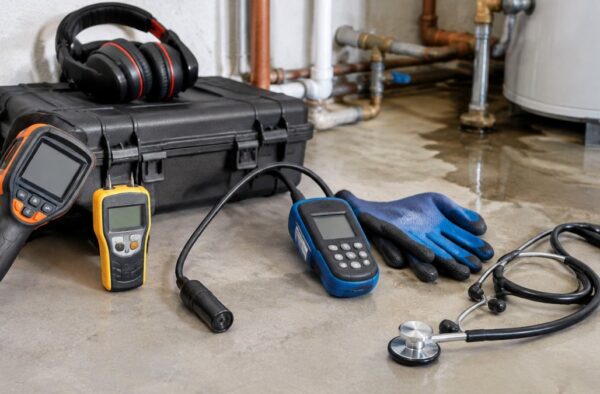
Often, yes. Plumbers use non-invasive tools such as acoustic listening devices, moisture meters, and thermal imaging cameras to narrow down where water is escaping before any wall is opened. Each method has limits, so results are usually confirmed with a second test. Hydroworks Plumbing offers leak detection services in the East Bay; contact the team on the website for current scheduling and a quote.
When should a homeowner consider whole-house repiping?
Repiping is worth discussing when a home has older galvanized or polybutylene pipes, repeated leaks in different areas, or low water pressure that persists after simpler fixes. Pre-1980 homes in the East Bay are a common case. A leak found during detection can point to a wider pipe condition, so ask for a written assessment that explains the pipe material, the leak location, and your options.