Last Updated: November 5, 2026
Quick Summary
The average cost of residential slab leak repair depends less on the leak itself and more on how a plumber reaches it, since every estimate breaks into five cost buckets: detection, access, plumbing labor and materials, concrete restoration, and finish repair. Repair method is the single largest driver of the total bill, so compare quotes on scope rather than on the bottom line.
- Every legitimate slab leak estimate separates into five cost buckets, and you should ask for all five in writing.
- Detection is the cheapest bucket in the project, yet it determines whether every other bucket stays small.
- Spot repair is the least invasive option when the leak is isolated and the floor above can be opened.
- Homeowners insurance sometimes covers the water damage a slab leak causes, but rarely the pipe repair itself.
- Restoration is the bucket homeowners forget, and it is where budgets quietly blow past the estimate.
Table of Contents
- What Drives the Average Cost of Residential Slab Leak Repair
- Slab Leak Detection Cost and How Leaks Are Located
- Slab Leak Repair Methods and What Each One Costs
- Choosing a Repair Method: A Decision Framework
- Does Homeowners Insurance Cover Slab Leak Repair?
- Using an Average Cost of Residential Slab Leak Repair Calculator
- How to Evaluate a Slab Leak Repair Estimate and Avoid Unnecessary Work
- Post-Repair Restoration and Secondary Water Damage
- Schedule a Slab Leak Inspection with Hydroworks Plumbing
- Frequently Asked Questions
What Drives the Average Cost of Residential Slab Leak Repair
The average cost of residential slab leak repair depends less on the leak itself and more on how a plumber reaches it. A pinhole leak in a hot-water line under an accessible garage slab and a burst pipe beneath a tiled bathroom floor can be the same defect, yet the projects land in completely different price brackets. This guide breaks down where the money actually goes, so you can read an estimate with a clear head instead of guessing.
That distinction matters because most homeowners shop for repair quotes as if they were comparing identical products. They are not. A quote that looks high usually bundles detection, concrete removal, plumbing labor, and finish restoration into one number. A quote that looks low often covers only the pipe.
Below, we will show you exactly how the five cost buckets stack up, which repair method fits which situation, and how to spot an estimate that is padded with work you do not need.
The Five Cost Buckets Behind Every Estimate
Every legitimate slab leak estimate separates into five cost buckets. Ask for all five in writing.
- Detection: finding the leak with electronic, acoustic, or pressure-testing equipment
- Access: breaking through concrete or flooring to reach the under-slab pipe
- Plumbing labor and materials: the actual repair or reroute, priced by linear foot and pipe material
- Concrete restoration: pouring and finishing new concrete where the slab was opened
- Finish repair: replacing tile, carpet, laminate, or baseboards disturbed during access
A common mistake is accepting a lump-sum quote that collapses these buckets into one figure. When access and restoration are invisible, you cannot tell whether you are paying for a spot repair or a full repipe. Insist on the breakdown. The plumber who resists giving it is telling you something useful.
Slab Leak Detection Cost and How Leaks Are Located
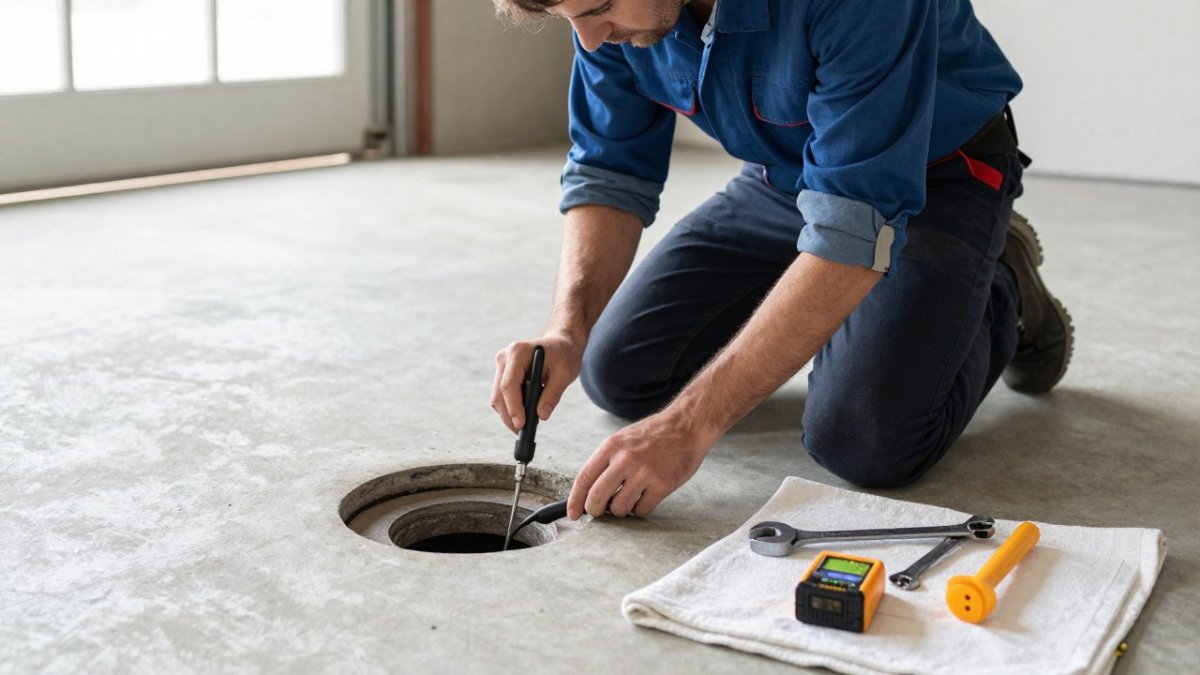
Slab leak detection is the diagnostic step that pinpoints where water is escaping beneath a concrete slab, and it is priced separately from the repair itself. Detection is the cheapest bucket in the project, yet it determines whether every other bucket stays small.
Electronic, Acoustic, and Pressure Testing Tools
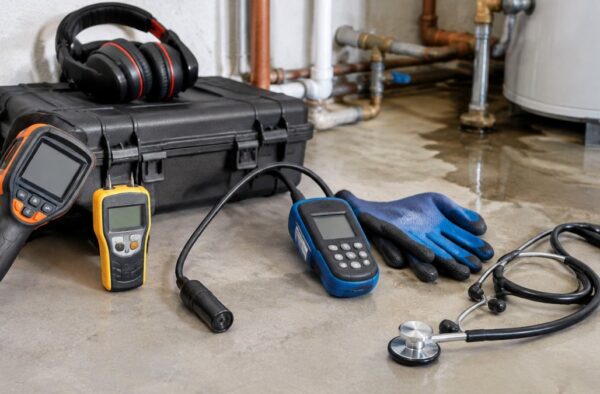
Plumbers locate slab leaks with three main tool families, and the right combination narrows the search fast:
- Acoustic listening equipment picks up the sound of pressurized water escaping a pinhole or crack
- Thermal imaging reveals hot spots where a hot-water line is leaking under flooring
- Pressure testing isolates the hot-water line, cold-water line, or drain to confirm which system is losing water
A moisture meter and a water bill comparison round out the picture. Watch out: a plumber who quotes a repair without isolating which line is leaking is guessing, and you will pay for that guess twice.
If you want to understand what a diagnostic fee actually covers before you authorize work, read our breakdown of plumbing diagnostic fee transparency.
Slab Leak Repair Methods and What Each One Costs
Repair method is the single largest driver of the total bill, because it sets how much concrete and flooring gets removed, how much plumbing labor is required, and whether restoration is a small patch or a room-wide rebuild. Four methods cover nearly every residential case, and they scale from a small opening to a full repipe. The table below summarizes the mechanics; the sections that follow explain how each method is priced and where it breaks down.
| Method | What It Involves | Access Needed | Typical Pricing Logic | Best For |
|---|---|---|---|---|
| Spot repair | Open the slab directly above the leak and fix that section of pipe | Small concrete opening, often 1-3 square feet | Detection + concrete cutting + hourly plumbing labor + patch | Isolated pinhole leak, accessible location, unfinished floor |
| Pipe rerouting | Abandon the failing under-slab line and run new pipe through walls or attic | Minimal slab work; carpentry at walls and ceiling | Linear-foot pipe and fittings + carpentry + drywall repair | Repeated leaks on one line, finished flooring above |
| Repiping | Replace the home’s water lines with new pipe | Moderate, varies by layout and number of fixtures | Linear-foot pipe + fixture tie-ins + wall and ceiling access | Old galvanized or polybutylene systems, multiple failures |
| Tunneling | Dig beneath the foundation from outside to reach the pipe | No slab removal; exterior excavation and shoring | Excavation labor + shoring + plumbing + backfill and compaction | Interior flooring that cannot be disturbed |
Spot Repair, Rerouting, Repiping, and Tunneling Compared
Spot repair is the least invasive option when the leak is isolated and the floor above can be opened without wrecking a finished surface. The method falls short when the same pipe has already failed once; a second pinhole nearby is likely, and a second spot repair repeats the access and restoration costs.
Rerouting avoids concrete entirely by running a new line overhead or through walls. It spares your floors, though it can involve more carpentry where the new line travels. Rerouting is often the right answer when the failing line serves a single fixture group and the rest of the system is sound.
Repiping addresses the whole system. For pre-1980 homes with galvanized steel, it is often the honest recommendation rather than an upsell, because galvanized pipe corrodes from the inside and produces leaks in clusters. Repiping is priced by linear foot of pipe plus fixture tie-ins, and the total depends heavily on how many stories the home has and whether the pipe runs through finished walls. It is the highest-disruption option short of tunneling and usually the highest total cost, but it ends the leak cycle rather than postponing it.
Tunneling costs the most in labor but protects interior finishes, which is why it suits homes with tile or hardwood over the slab. A crew excavates from outside the foundation, shores the opening, reaches the pipe from below, and backfills when finished. Pricing is driven by excavation length, soil conditions, and shoring requirements rather than by pipe length alone. Tunneling is rarely the cheapest quote, but it can be the lowest total cost when the alternative is tearing out and replacing a finished floor.
For a direct comparison to weigh against a spot repair quote, see repiping versus spot repair. And if you want real repiping figures to anchor your budget, our whole house repiping cost page lays out what drives the number.
How to Choose Between Methods Without Overpaying
Method selection is where estimates diverge most, so compare quotes on scope rather than on the bottom line. Ask each contractor to state the pipe material and linear footage, the access method, and whether restoration is included. A quote that names the method and justifies it in writing is easier to compare than a lump sum. Watch out: a full repipe quoted when a reroute would solve the problem is a common upsell, and the tell is a justification that cites “prevention” without naming pipe condition or leak history.
Choosing a Repair Method: A Decision Framework
Choosing a repair method comes down to three questions, answered in order. Work through them before you accept any quote.
- Is the leak isolated or is the pipe failing systemically? One leak on one line points to spot repair or rerouting. Multiple leaks or old galvanized pipe point to repiping.
- What sits above the leak? Raw concrete or an unfinished garage floor tolerates direct access. Finished tile or hardwood favors tunneling or rerouting.
- How long do you plan to stay? A short-term owner may reroute; a long-term owner with aging pipe usually comes out ahead repiping.
If the answers conflict, prioritize question one. Systemic pipe failure does not get fixed by patching one hole, and a plumber who recommends a spot repair on a house with four prior leaks is selling you a return visit.
Does Homeowners Insurance Cover Slab Leak Repair?
Homeowners insurance sometimes covers the water damage a slab leak causes, but it rarely covers the repair of the pipe itself. That distinction trips up most claims.
Policies typically treat the failed pipe as a maintenance issue and the resulting water damage as a covered peril, subject to your deductible and policy terms. Coverage for access, such as breaking through the slab to reach the pipe, varies by carrier and endorsement. According to the Insurance Information Institute’s guidance on homeowners claims, policy language and exclusions decide the outcome, not the plumber’s opinion.
Document everything before work starts: photographs of moisture and damage, the detection report, and the itemized estimate. Ask your adjuster two direct questions: is access covered, and is the pipe repair excluded? Get the answer in writing. Watch out for assuming a yes on either.
Using an Average Cost of Residential Slab Leak Repair Calculator
An average cost of residential slab leak repair calculator is a budgeting tool, not a quote. It takes your inputs and returns a range, and the range is only as good as the inputs.
Feed a calculator these five variables for a realistic output:
- Pipe material (copper, galvanized, PEX, polybutylene)
- Leak location (garage, bathroom, kitchen, hallway)
- Flooring type above the slab
- Repair method you are considering
- Whether detection is already done
Treat any calculator result as a starting range for planning, then confirm with an on-site estimate. A tool cannot see your slab, your flooring, or how deep the pipe sits.
How to Evaluate a Slab Leak Repair Estimate and Avoid Unnecessary Work
Evaluating a slab leak repair estimate means checking that it itemizes the five buckets, matches the method to your situation, and excludes work you did not authorize. Run this checklist before you sign.
- Detection, access, plumbing, concrete, and finish repair listed separately
- Pipe material and linear footage stated
- Repair method named and justified in writing
- Restoration scope defined (who pours concrete, who replaces tile)
- Warranty terms on labor and materials spelled out
- No line items for work you did not discuss
A common upsell is a full repipe quoted when a reroute would solve the problem. Ask why the broader method is necessary. A straight answer cites pipe condition and leak history. A vague answer cites “prevention.” For a step-by-step method to judge fairness, our guide on how to read a fair slab leak repair estimate walks through the comparison.
Post-Repair Restoration and Secondary Water Damage
Restoration is the bucket homeowners forget, and it is where budgets quietly blow past the estimate. Once the pipe is fixed, someone still has to pour concrete, cure it, and replace the flooring above. Most slab leak quotes cover the plumbing and stop there, so the restoration line is either excluded or buried in a lump sum. Ask for it separately.
The Three Restoration Phases and What Each Costs
Restoration breaks into three phases, and each is priced differently:
- Concrete patching and curing. The opening is filled, leveled, and finished to match the surrounding slab. Pricing is driven by the square footage of the opening and whether the patch needs to match a visible floor. A small utility-room patch is a minor line item; a patch in a finished living area is not.
- Flooring replacement. Tile, carpet, laminate, and hardwood are removed during access and must be replaced. Matching discontinued flooring can be difficult because the material may no longer be available. Ask who sources the material and who pays for a dye-lot mismatch.
- Moisture check before finishes go back down. Concrete and subfloor must be dry before flooring is reinstalled, or the new finish traps moisture and fails. A moisture check is inexpensive and prevents a repeat restoration.
Ask your plumber which phases are in the quote and which are billed separately. A quote that includes concrete but excludes flooring is not wrong, but it is incomplete, and the gap is where budgets blow.
Secondary Water Damage and Who Pays for It
Secondary water damage is the bigger risk. Moisture trapped under a slab can wick into flooring, warp baseboards, and feed mold in adjacent walls. The EPA’s guidance on mold and moisture control recommends drying affected areas promptly, because mold can establish within days of a leak. Drying, mold remediation, and foundation repair are usually separate trades from plumbing, and they are usually separate line items.
This is where insurance enters. Most policies treat the failed pipe as a maintenance issue and the resulting water damage as a covered peril, subject to your deductible and policy terms. That means the restoration phases may be partially covered even when the pipe repair is not. Document moisture and damage with photographs before work starts, keep the detection report, and ask your adjuster directly whether drying and mold remediation are covered. Get the answer in writing.
Watch out: assuming the plumber’s quote covers drying or mold remediation. Confirm the scope in writing.
Schedule a Slab Leak Inspection with Hydroworks Plumbing
A slab leak rarely gets cheaper with time. Water keeps moving, damage spreads, and the eventual repair grows to include restoration you could have avoided.
At Hydroworks Plumbing, our licensed and insured team uses modern equipment to pinpoint the leak, and we provide upfront cost information before work begins. We serve homeowners and property managers across Hayward and the East Bay with 24/7 emergency service, and we recommend practical solutions suited to your pipe and your floors. You get accurate problem diagnosis, clear recommendations, and practical solutions built to last.
Get started with Hydroworks Plumbing and schedule a slab leak inspection before a small leak turns into a foundation problem.
A slab leak is a timing problem as much as a plumbing one. The longer water runs under your foundation, the more the repair grows. If you have noticed hot spots on the floor, an unexplained water bill climb, or the sound of running water with every fixture off, get it looked at now. Hydroworks Plumbing offers 24/7 emergency service, upfront cost information before work begins, and modern equipment for diagnosing leaks. Get started with Hydroworks Plumbing and get an honest diagnosis before the damage spreads.
Frequently Asked Questions
Is a slab leak expensive to fix?
It can be, because the total bill covers more than plumbing. A slab leak repair estimate typically includes detection, breaking and removing concrete, the plumbing work itself, patching the slab, and restoring flooring. Spot repairs that reach the leak through a small opening usually cost less than rerouting or repiping a larger section of line. Because pricing depends on access, pipe material, and how much concrete and flooring must come out, ask for an itemized quote rather than a single lump sum.
Will homeowners insurance pay for a slab leak?
It depends on the policy and the cause. Many standard homeowners policies cover sudden, accidental water damage, such as a burst pipe that soaks drywall or flooring, but exclude the cost of repairing the pipe itself and the concrete breaking needed to reach it. Gradual leaks and wear-related failures are often excluded. Check your policy’s water damage and pipe repair language, document the damage with photos, and ask your adjuster which portions are covered before authorizing work.
How much does slab leak detection cost?
Detection is usually a separate line item from the repair. Plumbers use electronic leak detection, acoustic listening equipment, thermal imaging, and pressure testing to pinpoint the leak before any concrete is opened. The fee reflects the equipment and time involved, and some companies apply it to the repair if you proceed. Ask upfront whether the diagnostic fee is credited toward the job, and get the detection findings in writing so a second opinion does not require paying for another diagnosis.
Is it better to reroute a pipe or repair it under the slab?
It depends on the pipe’s condition and location. A spot repair through a small access opening makes sense for an isolated pinhole leak in an otherwise sound line. Rerouting the line through the attic or walls avoids breaking more concrete and is often favored when the under-slab pipe is failing in multiple places. Repiping the whole house is the long-term option for older systems with widespread corrosion. A decision framework comparing access cost, pipe material, and remaining lifespan helps you choose.
How can I compare slab leak repair estimates?
Ask each plumber for an itemized estimate that separates detection, access and concrete removal, plumbing labor and materials, slab patching, and flooring or finish restoration. Confirm whether the price is a fixed bid or an hourly rate with a cap, whether permits are included, and what warranty covers the work. Line-by-line quotes let you compare apples to apples and spot a low bid that leaves restoration costs out. A second opinion on the diagnosis is reasonable before signing.
How urgent is a slab leak?
Treat an active slab leak as urgent. Water running under a foundation can erode soil, crack the slab, and feed mold in flooring and walls, and the damage grows the longer it runs. Shut off the water at the main if the leak is active, limit hot-water use if the leak is on the hot-water line, and call a plumber with 24/7 service. Delaying repair usually raises the total cost because secondary water damage and concrete work add to the bill.