Last Updated: November 4, 2026
Quick Summary
Low water pressure is a weak stream or slow flow at your taps, and the fastest way to narrow down why is to test one fixture against the rest of the house. If only one tap trickles, the cause is usually a clogged aerator or fixture blockage, while weak flow everywhere points to the supply side: your main shutoff valve, pressure regulator valve, water service line, or the municipal supply.
- Unscrew a clogged aerator by hand, rinse it, and soak it in white vinegar for about an hour to dissolve scale.
- A water meter that keeps spinning with every fixture off means water is escaping somewhere.
- A pressure gauge screwed onto a hose bib gives you a real PSI number to work with.
- Check the main shutoff valve first for a sudden drop because it is free and takes thirty seconds.
- Call a professional when the pump short-cycles, the tank will not hold its charge, or pressure stays low after new filters.
Table of Contents
- Is the Problem One Fixture or the Whole House?
- Signs of Low Water Pressure in House You Should Not Ignore
- Common Causes of Low Water Pressure in a Home
- Why Is Water Pressure Low in House Suddenly?
- What Causes Low Water Pressure in a House with a Well?
- How to Fix Low Water Pressure in House with a Well
- DIY vs. Professional: When to Stop Troubleshooting and Call a Plumber
- Schedule a Diagnostic Visit with Hydroworks Plumbing
- Frequently Asked Questions
Is the Problem One Fixture or the Whole House?
Low water pressure is a weak stream or slow flow at your taps, and the fastest way to narrow down why is to test one fixture against the rest of the house.
Here is the two-minute test:
- Open the kitchen faucet fully and note the flow.
- Open a bathroom sink and a shower at the same time.
- Check an outdoor spigot if you have one.
One weak fixture points to a clogged aerator or fixture blockage. Weak flow everywhere points to the supply side of your plumbing system. A pressure gauge screwed onto a hose bib gives you a real number to work with, usually measured in PSI.
Signs of Low Water Pressure in House You Should Not Ignore
The signs of low water pressure in house plumbing show up long before a pipe fails. A dribbling shower is annoying, but rusty water, banging pipes, and an unexplained rising water bill are warnings.
Watch for these signals:
- Sudden drop at every fixture. Something changed on the supply side.
- Weak flow at one tap only. Likely a clogged aerator or fixture blockage.
- Brown or rusty water. Corrosion inside the piping.
A sudden drop is the one to take seriously. Gradual decline usually means sediment buildup or scale accumulation. A sudden change means a valve moved, a pipe failed, or your water utility changed something.
Common Causes of Low Water Pressure in a Home
The common causes of low water pressure in a home fall into two groups: problems inside your plumbing system and problems on the supply side. Most homeowners assume the worst, but the fix is often a half-closed valve or an aerator packed with mineral deposits.
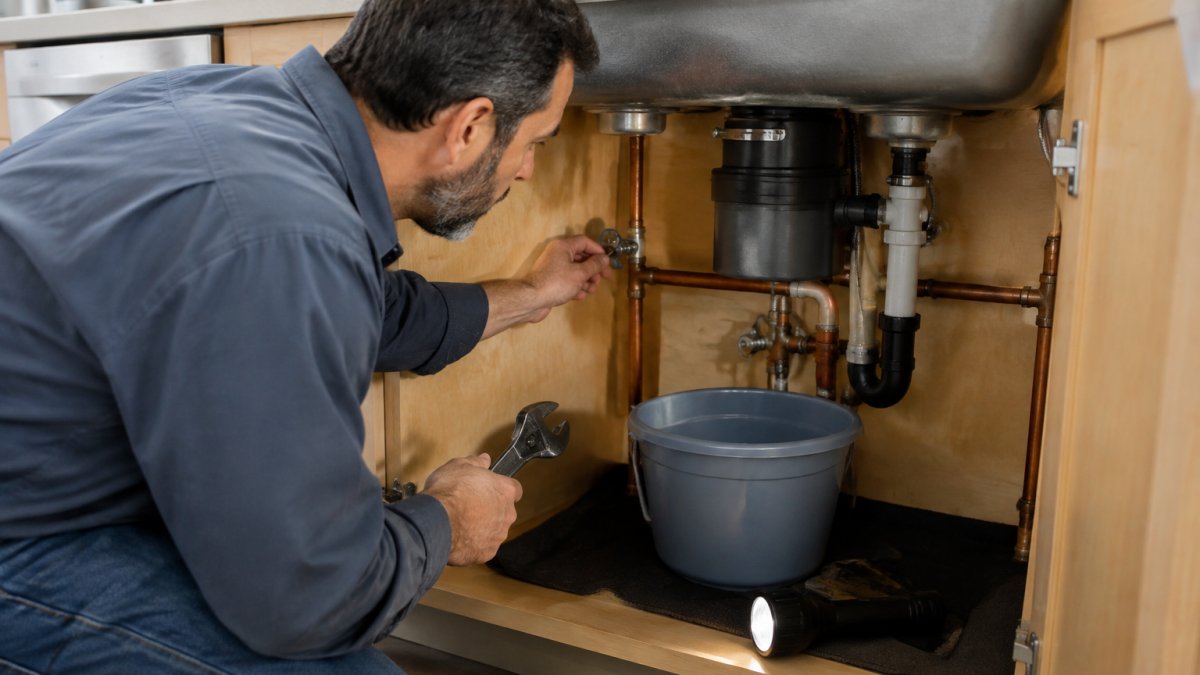
Below are the six causes we find most often, roughly in order of how easy they are to rule out. The tell is which fixtures are affected and whether the drop came on suddenly or faded over months.
Clogged Aerators and Fixture Blockage
A clogged aerator is the most common cause of weak flow at a single tap. The screen at the faucet tip traps mineral deposits and debris.
The same logic applies to showerheads and faucet cartridges. A fixture blockage costs nothing to check and takes five minutes. The tell is one weak fixture while the rest of the house runs normally.
Sediment Buildup and Mineral Deposits in Pipes
Sediment buildup narrows the inside of your pipes the way cholesterol narrows an artery. Hard water leaves scale on pipe walls, and flow rate drops as the opening shrinks.
Signs of sediment buildup include:
- Pressure that fades over months, not hours
- Discolored water when you first open a tap
- Weak flow at fixtures farthest from the water main
If buildup runs through the whole plumbing system, whole house repiping is one option to consider, and a licensed plumber can advise whether replacement is appropriate for your home.
Faulty Pressure Regulator Valve (PRV)
A pressure regulator valve (PRV) is a device near your main shutoff valve that caps incoming pressure at a safe level. Municipal systems can deliver 100 PSI or more at the meter, and without a PRV that pressure would stress every supply line, appliance connector, and fixture in the house.
This is a whole-house cause, not a fixture cause. If every tap is weak and you have a PRV, have it tested with a pressure gauge on both sides.
Partially Closed Main Shutoff Valve
The main shutoff valve controls water entering your home. If someone turned it partly closed during a repair and never opened it fully, every fixture suffers.
Find the valve, turn it fully counterclockwise, and retest. Gate valves that have not been turned in years can seize or break at the stem, so turn them gently and stop if you feel resistance.
Hidden Plumbing Leaks and Corroded Piping
A hidden plumbing leak steals pressure before water reaches your taps. Corroded or old piping does the same thing from the inside. Both are easy to miss because the water disappears into a wall, a slab, or the ground.
Watch out: a water meter that keeps spinning with every fixture off means water is escaping somewhere. If you suspect a hidden leak, water leak detection finds and confirms it without tearing into walls on a hunch. When the leak or corrosion sits at the main line, water main repair covers the fix.
Municipal Supply Issues and High Water Demand
Sometimes the problem is not in your house at all. Municipal supply issues, water main work down the street, or peak-hour demand from your neighborhood can drop pressure at your meter.
This is where the difference between pressure and flow matters. Pressure is the push behind the water, measured in PSI.
Call your water utility and ask whether work is happening nearby. If neighbors report the same drop, the cause is upstream.
Why Is Water Pressure Low in House Suddenly?
Water pressure low in house suddenly almost always means something changed on the supply side, not that your pipes wore out overnight. Pipes clog gradually; valves, pumps, and regulators fail in an instant.
The usual suspects for a sudden drop, in the order you should test them:
- The main shutoff valve was partly closed. Someone worked on the system and did not reopen it fully. Check this first because it is free and takes thirty seconds.
- The pressure regulator valve failed. A PRV that fails closed chokes the whole house at once. Test with a gauge on a hose bib; a reading well below 50 PSI with normal supply pressure upstream confirms it.
- A pipe sprang a leak. A burst supply line or failed fitting drops pressure fast. With every fixture off, a meter that keeps spinning means water is escaping.
- The water utility is working nearby. A water main break or scheduled repair down the street can drop pressure at your meter with no warning. Call the utility before you call a plumber.
- A well pump or pressure tank stopped keeping up. On a well system, a failing pump or waterlogged tank causes pressure to swing and then fade, often with the pump short-cycling.
Start with the free checks: valve position, then the meter test for leaks, then a call to your utility. If all three come back clean, the regulator or the well system is next.
Seasonal Pressure Fluctuations
One cause most guides skip is the calendar. Demand rises in summer when irrigation systems and pools draw heavily, and some municipal systems deliver noticeably less pressure during peak draw hours, usually early morning and early evening. Cold snaps matter too: a supply line that partially freezes restricts flow without bursting. If your pressure drops at the same time every year or day, log the readings for a week before paying for a diagnostic visit.
Pressure vs. Flow: Why the Gauge and the Shower Disagree
A sudden weak shower does not always mean pressure dropped. Pressure is the push behind the water, measured in PSI. Flow is the volume delivered over time, measured in GPM. A fixture with a clogged screen or failed cartridge can cut flow while static pressure at the meter stays normal. That is why the first step is a gauge reading on a hose bib with everything off: if static pressure is healthy but the shower still runs weak, the problem is flow at the fixture, not pressure in the system.
What Causes Low Water Pressure in a House with a Well?
What causes low water pressure in a house with a well comes down to the well pump, the pressure tank, and the filters between them. A well system is a closed loop you own, so every component is a possible failure point.
Well Pump and Pressure Tank Problems
The pressure tank stores water under air pressure so your well pump does not run with every tap. When the tank loses its air charge or the bladder fails, pressure swings and then fades. A failing well pump delivers less water per cycle, and you feel it at every fixture.
Listen to the system. A pump that runs constantly or short-cycles is telling you something is wrong.
Clogged Sediment Filters and Water Treatment Systems
Sediment filters, water softeners, and whole-house treatment systems sit between the well and your taps. A clogged filter strangles flow the same way a clogged aerator does, only for the whole house. Change filters on schedule and check the treatment system if pressure drops after a filter change.
How to Fix Low Water Pressure in House with a Well
How to fix low water pressure in house with a well starts with the pressure tank and switch, then moves to the filters, then to a professional. Work in that order because the first two are homeowner checks and the third is not.
Check the Pressure Tank and Pressure Switch
Tap the tank. A healthy tank sounds hollow at the top and solid at the bottom. A tank that sounds solid all the way up has lost its air charge. Check the pressure switch setting against the tank’s air charge, and note whether the pump kicks on and off in short bursts. Short cycling points to a tank problem.
Inspect and Replace Clogged Filters
Pull the sediment filter and hold it up to the light. A filter that looks caked or dark is restricting flow. Replace it, then retest pressure at a nearby tap. If pressure returns, the filter was the cause. Keep a spare on hand and log the change date.
When to Call a Well Pump Professional
Call a professional when the pump short-cycles, the tank will not hold its charge, or pressure stays low after new filters. Well pump work involves electrical connections and the water service line, and it is not a homeowner job.
DIY vs. Professional: When to Stop Troubleshooting and Call a Plumber
Consider calling a licensed plumber when the problem is house-wide, when the water meter spins with everything off, or when you have checked the valve and aerators and nothing changed.
Use this rule of thumb:
| Symptom | Likely Cause | DIY or Pro |
|---|---|---|
| One tap runs weak | Clogged aerator | DIY: clean the screen |
| Every tap runs weak | Main valve or PRV | DIY check valve, pro for PRV |
| Meter spins with water off | Hidden leak | Pro: leak detection |
| Rusty water plus weak flow | Corroded piping | Pro: repipe assessment |
| Pump short-cycles | Pressure tank or pump | Pro: well specialist |
A common mistake is replacing fixtures when the real problem sits at the pressure regulator valve. Another is ignoring a spinning meter because the leak is small. Small leaks grow.
If you are weighing whether to keep poking at it yourself, our guide to DIY plumbing vs professional plumber lays out where the line sits.
Schedule a Diagnostic Visit with Hydroworks Plumbing
A weak shower is a small problem until it turns out to be a failing PRV or a slab leak. Hydroworks Plumbing sends a licensed and insured team to diagnose the cause accurately, with modern equipment and proven methods, and we give you upfront cost information before any work begins. Before you book, read what the diagnostic fee covers so there are no surprises.
Frequently Asked Questions
What is the most common cause of low water pressure in a house?
The most common cause is a partially closed main shutoff valve or a clogged aerator on individual fixtures. A valve that was not fully reopened after a repair restricts flow to the entire house. If only one faucet is weak, the aerator screen is usually blocked with mineral deposits. Checking both takes minutes and costs nothing before you consider calling a plumber.
Why did my water pressure suddenly drop throughout the house?
A sudden whole-house drop points to a change at the source. Common triggers include a pressure regulator valve that has failed, a main shutoff valve that was bumped partially closed, a hidden leak in the service line, or a municipal supply issue affecting your street. Start by checking the main valve position, then look for signs of leaks such as damp spots or a spinning water meter with all fixtures off.
Is 40 psi water pressure too low?
40 psi is at the low end of the normal range for most homes. Pressure targets vary by home and fixture, and a licensed plumber can measure whether your pressure is within an acceptable range. At 40 psi, showering and running appliances simultaneously can feel weak. If your gauge reads below 40 psi, check the pressure regulator and main valve. A licensed plumber can measure static and flowing pressure to confirm whether adjustment or repair is needed.
How do I fix low water pressure in a house with a well?
Start by checking the pressure tank gauge and the pressure switch setting, against the manufacturer’s specifications. Inspect and replace clogged sediment filters, and confirm the pump is running when demand increases. If the tank reads low or the pump short-cycles, call a well service professional. Well system repairs involve electrical components and pressure adjustments best handled by a licensed technician.