Last Updated: November 17, 2026
Quick Summary
Second opinion plumbing is a paid inspection by a different licensed plumber to confirm or challenge a diagnosis before you approve a repair. Get the first plumber’s written diagnosis and estimate first, then ask the second company what its service call includes and whether the diagnostic fee is credited toward the repair. Send photos, the written estimate, and any camera footage ahead of the visit.
- A wrong diagnosis makes every estimate built on it wrong, so the diagnosis matters more than the price.
- A plumber who quotes a repipe from the driveway is guessing before any inspection.
- Ask whether existing camera footage reduces the fee or is reviewed alongside a new inspection.
- Confirm whether the second opinion includes a written report you can compare against the first estimate.
- If three or more checklist boxes go unchecked, that diagnosis deserves a second look.
Table of Contents
- When a Second Opinion on Plumbing Work Is Worth It
- How to Request a Second Opinion Without Paying Twice
- Questions to Ask a Plumber During the Second Inspection
- How to Compare Plumbing Estimates Line by Line
- A Plumbing Diagnosis Checklist for Verifying the Recommendation
- What to Do When Plumbers Disagree
- Frequently Asked Questions
When a Second Opinion on Plumbing Work Is Worth It
Second opinion plumbing is a paid inspection by a different licensed plumber to confirm or challenge a diagnosis before you approve a repair.
A second opinion is worth the trouble in specific situations, and a waste of time in others. A slab leak diagnosis, a whole-house repipe recommendation, or a sewer line replacement call all carry big consequences. Those deserve a review.
Signs Your First Diagnosis Needs a Review
Watch for these red flags before you sign anything:
- The recommendation arrived before any inspection. A plumber who quotes a repipe from the driveway is guessing.
- The diagnosis names a major system failure but the explanation stays vague. “Your pipes are shot” is not a diagnosis.
- The written estimate has one lump sum with no breakdown of labor and materials.
One more: if the first plumber never showed you the problem, get a second set of eyes. A camera feed from a sewer line or a moisture reading from a wall is evidence. A verbal claim is not.
How to Request a Second Opinion Without Paying Twice
The trick to second opinion plumbing without paying twice is sequencing and transparency.
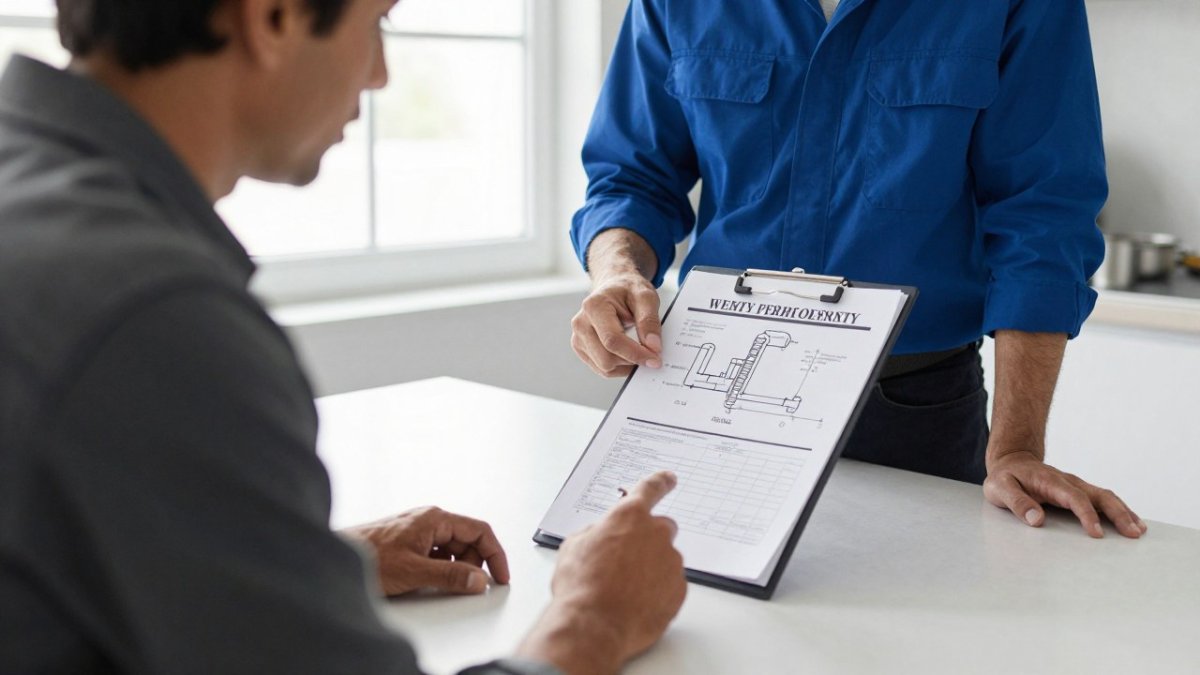
Call the second company and say plainly: “I have a written diagnosis and estimate from another plumber. I want an independent review.
Watch out: if the first company already ran a camera inspection, do not assume the second will accept that footage in place of its own.
What to Send the Second Plumber Before the Visit
Send these ahead so the second plumber arrives prepared, not blind:
- Photos of the problem area, including any visible water damage or corrosion.
- The first plumber’s written diagnosis and estimate, line by line.
- Any camera footage or moisture readings the first company shared.
- Your home’s age and pipe material if you know it. Homes built before 1980 often have galvanized steel or early polybutylene, which can change the diagnosis.
- A short note on the symptom you reported and when it started, so the second plumber can test the diagnosis against the original complaint.
If you want to understand what a diagnostic visit should and shouldn’t cost before you book, our breakdown of plumbing diagnostic fee transparency explains how the fee works and when it gets credited.
How to Sequence the Request So You Are Not Billed Twice
The order of operations matters more than most homeowners expect:
- Get the first plumber’s diagnosis and estimate in writing before you call anyone else. A verbal diagnosis gives the second plumber nothing to review.
- Ask the second company whether it will review the written estimate before the visit. Ask whether the company will review the written estimate by phone before the visit.
- Confirm whether the second opinion includes a written report you can compare against the first estimate.
Questions to Ask a Plumber During the Second Inspection
Ask these questions and listen for specifics, not reassurance:
- “Can you show me the evidence for your diagnosis?” A camera screen, a moisture meter reading, or a pressure test result counts. A hunch does not.
- “What repair options exist, and what happens if I choose the cheapest one?”
- “Is this a repair or a replacement situation, and why?”
That last question matters more than people realize. You can verify a plumber’s license through the state licensing board or your local building department. state contractor license lookup resources can point you to the right agency. A licensed plumber will hand over the number without hesitation.
Once you have your questions ready and want a second inspection booked, you can contact us to schedule a visit.
How to Compare Plumbing Estimates Line by Line
Comparing estimates fairly means comparing scope, not totals. Two estimates can look identical on the bottom line while covering completely different work, and the difference often hides in exclusions, permits, and warranty language.
Start with these columns: labor hours and rate, materials and brands, permits, disposal of old equipment, and warranty terms. A cheaper estimate that excludes permit fees or haul-away is not actually cheaper.
Flat-rate pricing bundles labor and materials into one figure per job, making apples-to-apples comparison simpler. Our guide to flat rate plumbing vs hourly plumber walks through the trade-offs, and our page on plumber cost per hour covers how rates are typically structured.
| Estimate Element | What to Check | Why It Matters |
|---|---|---|
| Diagnostic findings | Matches the second plumber’s findings | Confirms the diagnosis is solid |
| Scope of work | Lists every task included | Prevents surprise add-ons mid-job |
| Labor | Hours and rate stated separately | Lets you judge reasonableness |
| Materials | Brand and grade named | Cheap materials fail sooner |
| Permits and disposal | Included or excluded, stated clearly | Hidden costs surface later |
| Warranty | Length and what it covers | Protects you after the job ends |
| Exclusions | Named in writing | Defines where the price stops |
| Change-order terms | How added work is priced | Prevents mid-job repricing |
The Four Lines That Decide Most Comparisons
Most of the real difference between two estimates sits in four places. Read each one before you look at the total.
- Permits. Work that alters or extends a plumbing system often requires a permit, usually pulled by the contractor. If one estimate includes the permit and inspection and the other leaves it out, the totals are not comparable. Ask each company who pulls the permit and whether the inspection is included.
- Exclusions. Look for what the estimate says it will not do: wall or floor repair after access, drywall patching, painting, hauling away old fixtures, or restoring landscaping. These are legitimate exclusions, but they belong in the comparison, not in a surprise invoice.
- Change-order language. Ask how added work is priced if the job uncovers something unexpected. A written hourly or flat rate for change orders signals a disciplined estimate; a blank space signals a moving target.
Watch out: a lump-sum estimate with no breakdown is not automatically a bad estimate, but it removes your ability to compare scope. If you cannot tell what is included, ask for a written scope of work before you sign.
How to Read the Numbers Without Getting Anchored
Do not start with the totals. Read the scope of work on both estimates first, then the exclusions, then the warranty, and only then the price.
If the estimates differ mainly in labor hours, ask each company what drives the hours: access difficulty, pipe material, or the extent of the repair. If they differ mainly in materials, ask for the brand and grade on both.
A Plumbing Diagnosis Checklist for Verifying the Recommendation
Use this checklist to test whether the recommendation holds up:
- The plumber showed physical evidence: camera footage, moisture readings, pressure test results
- The diagnosis explains the symptom you actually reported
- At least two repair options were presented, not just the most expensive one
If three or more boxes go unchecked, that diagnosis deserves a second look. A repair recommendation should survive scrutiny, not fall apart under it.
What to Do When Plumbers Disagree
When two licensed plumbers give you different diagnoses, the tiebreaker is evidence, not confidence. Ask each what evidence supports their conclusion, then weigh which explanation better fits the symptoms you have observed.
Sometimes both are partly right. One plumber may find the immediate clog while the other spots the failing pipe behind it.
If the disagreement is genuine and neither side will budge, get a third inspection or ask your local building department whether a permit inspection applies. Our guide on how to choose the best plumbing companies in the East Bay covers what to look for in licensing, reviews, and service history.
Plumbing decisions get expensive fast when the diagnosis is wrong, and no homeowner should have to take a big repair recommendation on faith.
Frequently Asked Questions
When should I get a second opinion from a plumber?
Get one when the recommended repair is major, such as whole-house repiping, sewer line replacement, or a slab leak repair, and when the diagnosis is vague or the estimate lacks a written scope of work. A second opinion is also worth it if the first plumber cannot explain how they found the problem or pushes for immediate approval. For small fixes like a faucet repair or a cleared clogged drain, a second visit usually costs more than it saves.
Can a second plumber inspect the work without repeating the diagnosis?
Yes. Share the first plumber’s written findings, photos, and any camera footage before the visit. A licensed plumber can review that evidence, run a targeted inspection of the problem areas, and confirm or challenge the diagnosis. Ask upfront whether the diagnostic fee is reduced when you bring documentation, and whether it is applied to the repair if you proceed.
How do I compare two plumbers’ recommendations fairly?
Put both written estimates side by side and match them on scope of work, materials, labor, permits, and warranty. Check that each one names the specific pipe sections or fixtures being replaced and whether excavation or drywall repair is included. A lower total with a shorter scope is not cheaper, it is a smaller job. Ask each plumber to explain any line the other included, and confirm both are licensed and insured before deciding.
What should I do if two plumbers disagree about the problem?
Ask each one to show the evidence behind the diagnosis: camera footage, pressure test readings, moisture meter results, or photos of the failed part. The plumber who can point to physical proof is usually the more reliable source. If they still disagree, request a written summary from each and consider a third inspection focused only on the disputed area. Bring the plumbing diagnosis checklist to that visit so both findings are judged on the same criteria.