
11 Common Plumbing Mistakes Homeowners Make and How to Avoid Them
The most common plumbing mistakes homeowners make are using the wrong parts, overtightening fittings, and ignoring small leaks until they turn into costly plumbing problems.
Most Hayward homeowners try to handle small DIY plumbing repairs on their own. Some fixes are straightforward. Others look simple but go wrong fast when the right steps are skipped. DIYers who attempt plumbing repairs without proper knowledge often spend more fixing the mistake than they would have spent calling a professional plumber from the start. This breakdown covers the most common plumbing mistakes homeowners make so you can avoid costly plumbing problems and protect your home’s plumbing system.
Using the Wrong Parts for the Job
The wrong part of a plumbing repair fails faster than the original plumbing problem and often makes things worse.
Hardware stores carry hundreds of fittings, washers, valves, and connectors. Picking the wrong size or material for your specific pipe type causes leaks, pressure loss, and early failure. Hayward homes built before 1980 often have galvanized steel or cast iron pipes. Parts designed for modern PVC or copper systems do not work correctly on older pipe materials and damage your plumbing system over time.
Always confirm:
- The pipe material in your home before buying any part
- The correct diameter and thread type for the fitting
- Whether the part is rated for your home’s water pressure
- That the part meets California plumbing codes
Taking a photo of the existing part and bringing it to the hardware store saves you from a wrong purchase and a second plumbing repair.
Overtightening Fittings and Connections
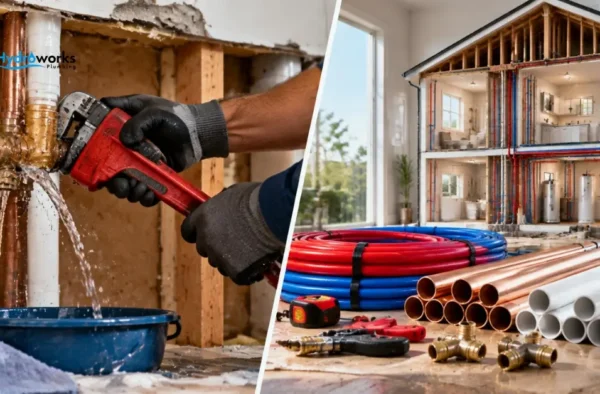
Overtightening a fitting cracks the connection, splits the pipe, or strips the thread and creates a new leak.
Most homeowners assume tighter means better when it comes to plumbing connections. It does not. Overtightening plastic fittings cracks them immediately. Overtightening metal connections strips the thread and creates a slow leak that shows up days later inside a wall or under a floor.
Hand-tight plus a quarter to half turn with a wrench is the correct approach for most fittings. If a connection still leaks after that, the problem is the seal or the part, not the tightness. Using excessive force on any plumbing connection is one of the most costly plumbing mistakes a homeowner can make.
Ignoring Small Leaks
A small drip that gets ignored becomes a mold problem, a structural issue, or a high water bill fast.
Small leaks under sinks, around toilet bases, and behind walls are easy to dismiss. In Hayward, water pressure runs higher than average in many neighborhoods. Even a minor drip moves more water than it looks like. Left alone, that water soaks into subfloors, wall cavities, and foundation slabs and causes costly water damage.
Signs of plumbing damage from ignored leaks:
- Water stains on ceilings or walls
- Soft or spongy spots on floors near plumbing fixtures and appliances
- A musty smell near a sink, toilet, or water heater
- A water bill that keeps climbing with no obvious reason
- Visible mineral deposits or rust stains around a fitting
Hydroworks Plumbing handles leak detection across Hayward and the East Bay. Their team finds leaks inside walls and under slabs before water damage spreads through your home’s plumbing system.
Using Chemical Drain Cleaners on Clogged Drains
Chemical drain cleaners do more harm than good on most clogged drains in Hayward homes.
Chemical cleaners eat through clogs but also eat through older pipe materials. Hayward homes with galvanized steel or cast iron pipes take the worst of it. Regular use of chemical drain cleaner weakens pipe walls, softens rubber seals, and shortens the lifespan of your plumbing system. Many homeowners reach for a chemical drain cleaner first because it looks like the easiest fix. It rarely solves the root cause of a clogged drain.
Better options for a clogged drain:
- A basic plunger for minor blockages in a sink or toilet
- A hand drain snake for deeper clogs in the line
- A professional drain cleaning service for recurring blockages
- Hydroworks Plumbing for stubborn clogs that keep coming back
DIYers who use chemical drain cleaners repeatedly on the same drain often end up needing extensive plumbing repairs on the pipe itself.
Skipping the Water Shutoff Before Starting a Repair
Starting any plumbing repair without turning off the water first turns a small fix into a flooded room.
This common plumbing mistake happens more than most homeowners admit. The repair looks minor and the shutoff valve feels like an extra step. Then the fitting comes loose and water goes everywhere. In Hayward, main water shutoff valves are typically near the street at the meter box, inside the garage, or along the foundation perimeter.
Before any DIY plumbing repair:
- Locate the shutoff valve closest to the repair
- Turn it fully off and test a nearby faucet to confirm water is off
- Keep a bucket and towels nearby for residual water in the line
- Know where the main shutoff is in case the local valve fails
Using the Wrong Tape or Sealant on Plumbing Connections
Teflon tape and pipe sealant are not interchangeable, and using the wrong one causes leaks from day one.
This tape, also called plumber’s tape or thread seal tape, works on threaded connections. Pipe joint compound works on different connection types. Some fittings need neither. Using tape where sealant belongs, or wrapping tape the wrong direction, leaves gaps that drip immediately or within days.
Common plumbing mistakes with tape and sealant:
- Wrapping Teflon tape clockwise instead of counterclockwise on the thread
- Using too little tape and leaving gaps in the thread seal
- Applying sealant to compression fittings that do not need it
- Using standard white Teflon tape on gas lines instead of yellow gas-rated tape
Getting this wrong on a DIY plumbing job creates a slow leak that damages walls and floors before anyone notices.
Leaving Pipes Without Support After a Repair
Pipes that run without proper support sag, vibrate, and pull apart at the joints over time.
When homeowners replace a section of pipe, they sometimes skip reattaching the hangers or brackets that hold it in place. In Hayward homes with crawl spaces or exposed pipes under sinks, unsupported pipes move with water flow and temperature changes. That movement loosens plumbing connections and causes slow leaks that turn into water damage inside your walls and floors.
Check that every replaced pipe section:
- Sits in its original hangers or new ones of the correct size
- Has no sections longer than the recommended span between supports
- Does not press against sharp edges or surfaces that cause wear on the pipe
Mismatching Pipe Materials at the Connection Point
Connecting two different pipe materials without the right fitting causes corrosion and leaks at the joint.
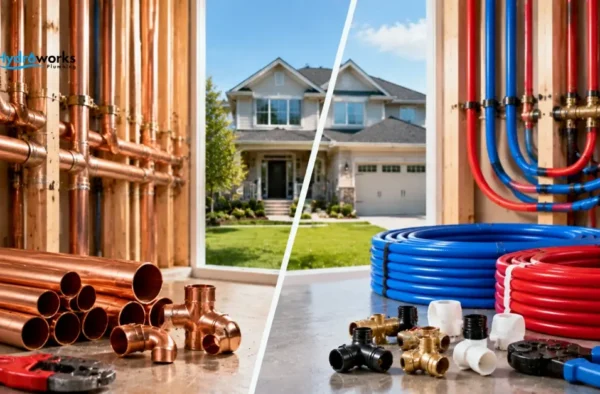
Hayward homes often have a mix of old and new pipe materials after years of plumbing repairs. Galvanized steel, copper, PVC, and CPVC all need specific transition fittings when joined together. Connecting copper directly to galvanized steel without a dielectric union causes galvanic corrosion.
Common plumbing mistakes with mismatched materials:
- Copper connected directly to galvanized steel
- PVC glued to CPVC without checking compatibility
- Flexible supply lines connected to rigid pipe without the right adapter
- Mixing pipe diameters without a proper reducer fitting
Misusing the Garbage Disposal
The garbage disposal is one of the most misused plumbing fixtures and appliances in Hayward homes.
Most homeowners treat the garbage disposal like a trash can. Pouring grease, fibrous vegetables, coffee grounds, and large food scraps down the drain clogs the line fast. Grease solidifies inside the drain and builds up over time until the line backs up completely. In Hayward, garbage disposal misuse is one of the most common plumbing issues that leads to emergency drain cleaning calls.
What not to put down the garbage disposal:
- Cooking grease or oil of any kind
- Coffee grounds and eggshells
- Fibrous foods like celery, corn husks, or onion skins
- Pasta, rice, or bread that expands with water
- Bones or hard food scraps that jam the blades
Attempting Repairs That Need a Licensed Plumber
Some DIY plumbing repairs look straightforward but legally require a licensed plumber and a permit in California.
Water heater replacements, sewer line repairs, and any work that changes your plumbing system layout all require permits in Hayward. Attempting plumbing repairs on these jobs without a licensed plumbing professional fails home inspections and creates problems if you plan to sell your home. Beyond permits, some repairs need specialized tools that go beyond basic DIY plumbing skills.
Call a professional plumber for:
- Water heater installation or replacement
- Any repair involving the main sewer line
- Slab leak detection and repair
- Whole house repiping
- Any plumbing work that requires opening walls in multiple rooms
- Emergency plumbing situations involving burst pipes or sewage backup
Hydroworks Plumbing handles all of these jobs across Hayward and the wider East Bay. One call gets you a clear price and a licensed plumber ready to handle the work correctly.
Forgetting to Test the Repair Before Closing Everything Up
Closing a wall or cabinet before testing the plumbing repair means reopening it if the fix leaks.
Every plumbing repair needs a full test before the job is done. Turn the water back on slowly, check every plumbing connection point for drips, run the fixture through a full cycle, and watch the area for a few minutes before putting tools away. In Hayward, water pressure in some neighborhoods runs higher than the national average.
Testing steps before closing up:
- Turn the water back on slowly and watch connections for immediate drips
- Run the fixture at full flow for at least two minutes
- Check underneath and behind the repair area for any slow seeping
- Dry the area completely and check again after 30 minutes
Skipping this step is one of the most costly plumbing mistakes a homeowner can make because reopening a finished wall costs more than the original plumbing repair.
How to Avoid Costly Plumbing Mistakes in Hayward?
Avoiding costly plumbing mistakes comes down to using the right parts, following the correct steps, and knowing when a job needs a licensed plumber.
Most plumbing mistakes homeowners make happen when the job gets rushed, a step gets skipped, or the wrong part goes in. Slowing down, confirming the right materials, and testing properly before closing up prevents most plumbing problems on this list. Keep your home’s plumbing in good shape and it saves you money in the long run.
| Common Plumbing Mistake | How to Avoid It |
| Wrong parts | Confirm pipe material and size before buying |
| Overtightening | Hand tight plus a quarter turn is enough |
| Ignoring small leaks | Fix drips before they cause water damage |
| Skipping the shutoff | Always shut off water before starting |
| Wrong tape or sealant | Match the product to the connection type |
| No pipe support | Replace hangers on every repaired section |
| Mismatched materials | Use correct transition fittings between materials |
| Chemical drain cleaner overuse | Use a snake or call for drain cleaning instead |
| Garbage disposal misuse | Only put soft food scraps down the drain |
| Skipping the test | Always test at full water pressure before closing up |
When the job goes beyond basic DIY plumbing repairs, a licensed plumber is always the right call. Hydroworks Plumbing serves Hayward and the East Bay with fast response, clear pricing, and a team that gets the plumbing repair right the first time.
FAQ
What is the most common plumbing mistake homeowners make?
Using the wrong parts for the job is the most common plumbing mistake. The wrong fitting, size, or material causes leaks and failures that cost more to fix than the original plumbing problem.
Are chemical drain cleaners safe for Hayward home pipes?
No. Chemical drain cleaners damage older pipe materials common in Hayward homes. A plunger, hand snake, or professional drain cleaning service is always the safer option.
When does a plumbing repair in Hayward need a permit?
Water heater replacements, sewer line repairs, and any work that changes your plumbing system layout require permits under California and Alameda County plumbing codes. Always ask your plumber before work begins.
How do I know if a small leak is causing hidden water damage?
Watch for soft spots on floors, water stains on walls or ceilings, a musty smell near plumbing fixtures, or a water bill that rises without explanation. These are clear signs of plumbing damage happening inside your walls.
Can I fix a slab leak myself in my Hayward home?
No. Slab leak repair requires specialized detection equipment and licensed plumbing work. Attempting plumbing repairs on a slab without the right tools causes more damage to your foundation and flooring.
Book Hydroworks Plumbing Today
Hydroworks Plumbing is Hayward’s local team for fast, honest plumbing service. They show up within 60 minutes, give you a clear price before work starts, and get the job done right. No surprises, no pressure, no runaround. Book your appointment today.